
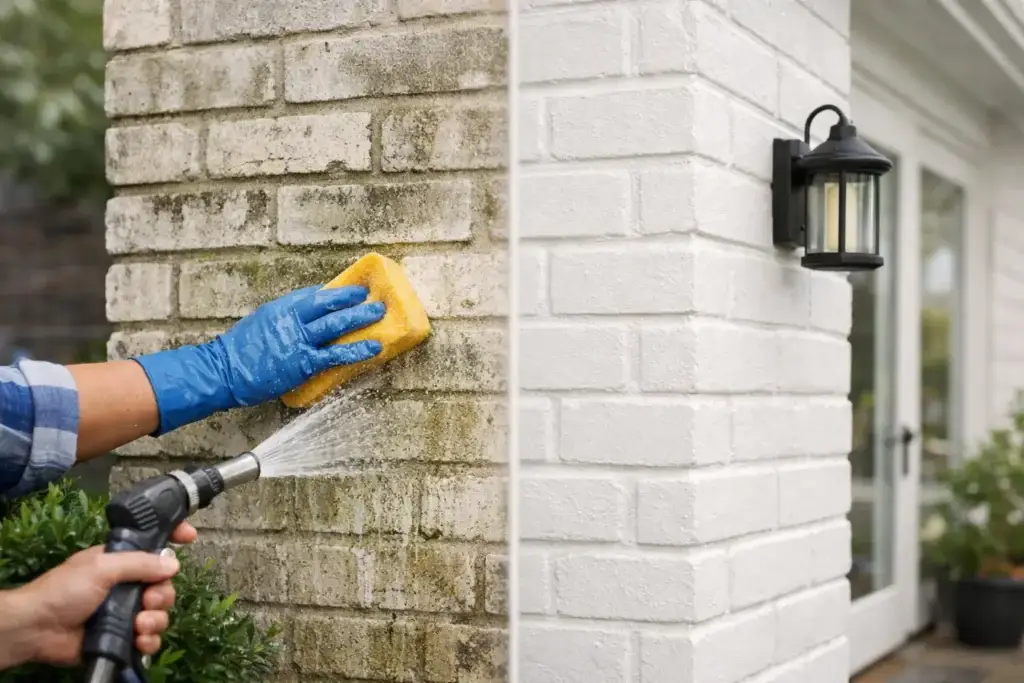
Painted brick can make a Connecticut home look crisp and well cared for, but green mildew, pollen, salt air, and winter grime can quickly dull the finish. Knowing how to clean painted brick exterior surfaces without stripping paint or forcing water behind the wall is the difference between a refresh and an expensive repair.
Brick itself is durable. The painted coating on top of it is the vulnerable part. Old paint may already be chalking, cracking, or separating from the masonry, especially on shaded walls and areas exposed to repeated freeze-thaw cycles. That is why painted brick calls for a controlled, low-pressure approach rather than the high-pressure cleaning many homeowners associate with power washing.
Why Painted Brick Needs a Different Cleaning Method
Unpainted brick has a porous, textured surface that can handle more aggressive treatment in some situations. Painted brick is different. Pressure that is too high can chip the coating, open up hairline cracks, damage mortar joints, and push water into gaps around windows, trim, or failed caulk.
The goal is not to blast away every mark. It is to kill and remove organic growth, loosen surface dirt, and rinse the wall carefully while preserving the paint. For most painted brick homes, soft washing is the safer choice.
Soft washing uses a low-pressure application of an appropriate exterior cleaning solution, followed by a gentle rinse. The solution does much of the cleaning work, so there is no need to rely on force. This is especially useful for black mildew, green algae, and the dark staining that tends to return on north-facing walls, beneath gutters, and near landscaping.
Inspect the Paint Before You Start
Cleaning cannot repair failing paint. Before bringing out a hose, solution, or pressure washer, walk around the house and inspect the painted brick in good daylight.
Look for peeling paint, blistering, deep cracks, soft mortar, loose bricks, missing caulk, and white powdery deposits known as efflorescence. A small amount of chalking can be normal on an aging painted surface, but heavy chalking means the coating may be near the end of its life. Washing may improve the appearance, yet it can also reveal areas that need scraping and repainting.
Pay close attention to water-related trouble spots. If staining keeps returning below a gutter, near a roofline, or along the bottom of the wall, the cleaning issue may actually be a drainage issue. Overflowing gutters, leaking downspouts, irrigation spray, and dense plant growth can keep masonry damp long enough for mildew to thrive.
If you see widespread peeling, deteriorated mortar, or signs that moisture is trapped behind the paint, pause before cleaning. Those conditions deserve a professional assessment first.
How to Clean Painted Brick Exterior Without Damaging It
A careful process protects the surface and produces a more even result. Work on a cool, overcast day when possible. Direct sun can cause cleaning solution to dry too quickly, which may leave uneven results or make rinsing harder.
Protect Plants, Windows, and Nearby Surfaces
Start by moving patio furniture, grills, decorative items, and anything else close to the wall. Cover delicate plants if needed, then thoroughly wet the surrounding landscaping with plain water. Keeping plants hydrated helps reduce the chance that cleaning solution will affect them.
Close windows and doors. Check that screens, exterior outlets, light fixtures, and vents are protected from direct spray. If your home has older windows, damaged seals, or visible gaps in the exterior, avoid spraying those areas until repairs are made.
Remove Loose Dirt First
Use a garden hose with a gentle spray nozzle to rinse away loose dust, cobwebs, and pollen. Begin near the top of the wall and work downward so dirty water does not run across an already cleaned area.
Do not use a narrow, concentrated nozzle. Even a hose attachment can cause trouble if it is held too close to old paint. Keep the water flow broad and gentle.
Apply a Paint-Safe Exterior Cleaner
For mildew and algae, use a cleaner formulated for exterior painted surfaces and follow the product directions exactly. Never assume that stronger is better. An overly concentrated chemical mix can discolor paint, harm nearby plants, or leave streaks if it dries on the wall.
Apply the solution from the bottom upward to help prevent drip marks. Let it dwell only as long as directed. The surface should stay wet during this period, so work in manageable sections rather than trying to coat an entire house at once.
Avoid abrasive cleaners, wire brushes, and harsh acidic products. They can scratch paint, etch masonry, or create a patchy finish. If a stubborn spot remains after treatment, use a soft-bristle brush with light pressure, then rinse again.
Rinse With Low Pressure
Rinse from the top down using clean water and a wide fan pattern. The key is low pressure and distance. Keep the spray moving, stand back from the wall, and never aim water upward into mortar joints, window trim, or weep holes.
A pressure washer can be used only with caution, and it is not the right choice for every painted brick wall. If the paint is old, cracked, or already loose, high-pressure washing can make the damage much worse. Many homeowners are better off using a hose for rinsing or hiring a soft washing professional with the equipment and experience to control pressure accurately.
What Not to Do When Cleaning Painted Brick
The most common mistakes happen when homeowners try to make a painted wall look new in one pass. Avoid these shortcuts:
- Do not use a zero-degree or narrow-tip pressure washer nozzle on painted brick.
- Do not spray close to the wall, cracked mortar, windows, vents, or electrical fixtures.
- Do not let cleaning solutions dry on paint, glass, plants, or metal surfaces.
- Do not use sandblasting, pumice, wire brushes, or abrasive pads.
- Do not clean when temperatures are near freezing or when a hard freeze is expected before the wall dries.
Bleach-based cleaning products also require care. They can be effective against organic growth when properly diluted and applied, but misuse can damage landscaping, discolor certain materials, and create runoff concerns. A professional soft washing team knows how to choose the right mix, protect surrounding property, and rinse thoroughly.
Test a Small Area First
No two painted brick surfaces are exactly alike. Paint age, paint type, previous repairs, sun exposure, and moisture history all affect how the finish will respond. Before cleaning a prominent wall, test your chosen method on a small, inconspicuous section.
Apply the cleaner, allow the proper dwell time, rinse gently, and let the area dry. Check for color change, paint loss, streaking, or unusual chalking. If the test area looks good, continue with the same process. If it does not, stop and adjust the approach rather than risking the rest of the exterior.
This small step is particularly valuable for historic homes and older coastal properties, where multiple layers of paint or prior moisture damage may be hidden beneath the surface.
When Professional Soft Washing Is the Better Option
A do-it-yourself rinse may be enough for light dust and pollen. Professional service makes more sense when you have widespread mildew, a tall two-story wall, heavy staining near the roofline, uncertain paint condition, or landscaping that requires careful protection.
Licensed and insured exterior cleaning professionals can assess the surface, apply the right treatment, and clean it without turning a maintenance job into a paint project. They also have the proper equipment to reach upper walls safely without leaning ladders against vulnerable brick or using excessive pressure.
For homeowners in Groton, Mystic, Waterford, and surrounding shoreline communities, regular soft washing can be especially helpful. Humidity, shade, tree cover, and coastal moisture often create ideal conditions for algae and mildew. CT Softwash LLC uses a surface-appropriate approach designed to restore curb appeal while protecting your home’s painted finish.
Keep Painted Brick Cleaner for Longer
Once the wall is clean, a few maintenance habits can slow the return of staining. Trim shrubs and vines back from the brick so air can circulate. Make sure downspouts carry water away from the foundation, repair leaking gutters promptly, and avoid directing sprinklers toward exterior walls.
A light annual inspection can catch mildew before it covers the surface and identify failing caulk or paint before moisture gets behind the coating. Most painted brick does not need aggressive cleaning every year. It depends on shade, nearby trees, weather exposure, and the condition of the paint.
A clean painted brick exterior should look refreshed, not scoured. When the right solution, low pressure, and careful rinsing are used, your home can regain its curb appeal while the paint and masonry stay protected for the seasons ahead.