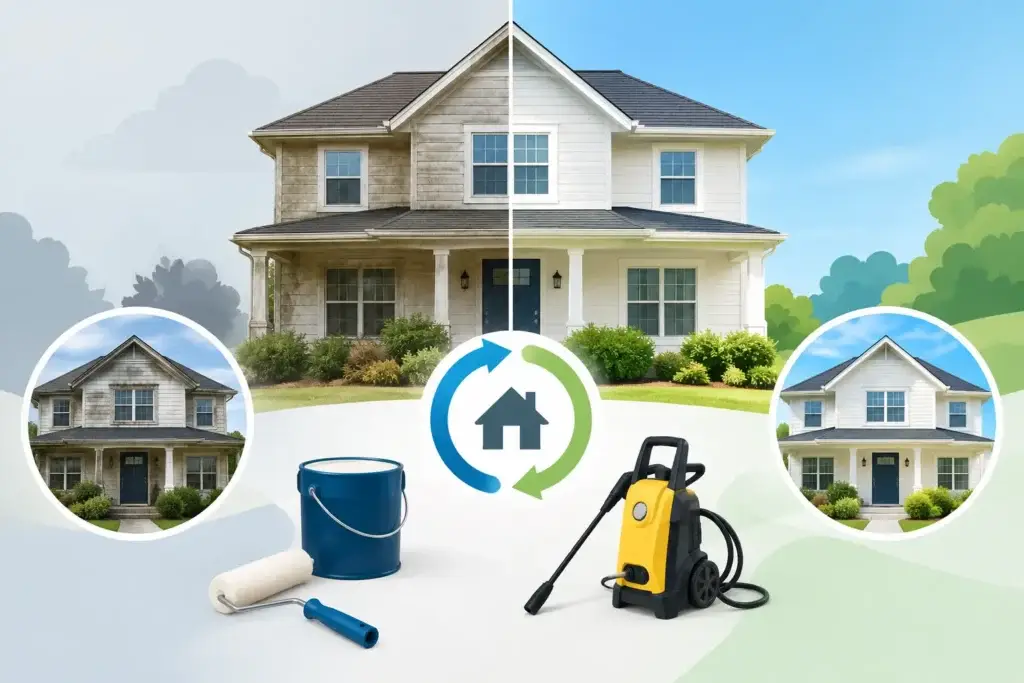
A home can look overdue for paint when the real problem is algae, mildew, pollen, and road grime clinging to the siding. Before spending thousands on a new coat of paint, homeowners often need to answer one practical question: house painting or house washing? The right choice depends on the condition of the surface beneath the buildup, not just how dirty it looks from the driveway.
For Connecticut homes, the answer is often to wash first. Our humid summers, wet springs, shaded yards, salt air near the shoreline, and leaf-heavy fall seasons create ideal conditions for organic growth. Professional soft washing can make siding look dramatically brighter while also revealing whether the paint is still protecting the home.
House Painting or House Washing: Start With the Surface
Painting and washing solve different problems. House washing removes surface contamination. Painting restores a failing protective coating and changes color or finish. One is maintenance; the other is a larger restoration project.
If your siding is structurally sound and the paint is still adhering well, washing may be all you need. Green or black streaks, dullness, spider webs, pollen, and mildew can make a home appear older than it is. A proper soft wash treats and removes that buildup without the unnecessary force that can damage siding, trim, or window seals.
Painting becomes the better investment when the existing finish has failed. Look closely at areas that receive the most sun and weather exposure, including south-facing walls, trim boards, porch railings, and fascia. If you see peeling, cracking, blistering, bare wood, widespread fading, or chalky paint that rubs off heavily on your hand, cleaning alone will not correct the underlying issue.
The key is not to paint over dirt, mildew, or loose paint. That can lead to poor adhesion and a finish that fails far sooner than it should.
Signs Your Home Likely Needs House Washing
A professional house wash is usually the right first step when the exterior looks dirty but remains intact. Vinyl siding, painted wood, fiber cement, stucco, and many other exterior materials can collect organic growth that makes a property look neglected even when the material itself is in good shape.
Mildew and algae commonly appear on the north side of a home, beneath trees, near gutters, and in areas with limited airflow. They may look like gray, green, or black staining. These stains are not always a paint problem. In many cases, they respond well to a low-pressure soft washing process that uses the appropriate cleaning solution and controlled rinsing.
House washing is also a smart choice when you are preparing for a listing, hosting an event, or simply want a fast curb appeal improvement. A clean exterior can make windows, trim, landscaping, and architectural details stand out again without committing to a full paint project.
It is also preventive maintenance. Organic growth can hold moisture against surfaces, especially on shaded siding and trim. Regular cleaning helps reduce the buildup that can contribute to staining and premature exterior wear.
Soft Washing Is Not Just High-Pressure Washing
Many homeowners use the term power washing for every exterior cleaning service, but different surfaces need different methods. High pressure can be useful on durable concrete surfaces such as driveways and patios. It is not the default answer for siding, roof shingles, painted trim, or delicate exterior materials.
Soft washing uses low pressure combined with professional-grade cleaning solutions to remove organic growth safely. The cleaning treatment does the work, not excessive force. This approach is especially important for vinyl siding and painted surfaces, where overly aggressive pressure can force water behind panels, strip paint, scar the surface, or damage caulking.
When House Painting Is the Better Choice
A fresh paint job is about more than appearance. Quality exterior paint acts as a barrier against sun, rain, wind, moisture, and seasonal temperature swings. Once that barrier begins to break down, exposed materials can become more vulnerable to water intrusion and deterioration.
Choose painting when washing reveals genuine coating failure. Peeling paint is an obvious sign, but it is not the only one. Wood that feels soft, trim with open cracks, exposed bare spots, and widespread discoloration that does not improve after cleaning all deserve closer attention. A painting project may also be worthwhile if your current color is severely faded or you are making a deliberate exterior update.
Before paint is applied, the surface must be properly prepared. That normally means cleaning, allowing adequate drying time, scraping loose paint, sanding rough edges, repairing damaged areas, and priming where needed. Skipping preparation might save time at the beginning, but it can shorten the life of the finished paint job.
For homes with a mix of problems, the best answer may be both services. Wash the siding and exterior surfaces first, complete needed repairs and paint preparation, then paint only the areas that require it. This avoids replacing a finish that still has years of useful life while addressing the parts of the home that truly need attention.
Why Washing Before Painting Matters
Even when painting is clearly necessary, washing should come first. Paint needs a clean, dry, stable surface to bond correctly. Dirt, chalking, mildew, and pollen create a barrier between the paint and the siding or trim. If that material stays in place, the new paint may bubble, peel, or wear unevenly.
Cleaning also gives you a more honest view of the project. What looked like faded paint may be surface grime. What looked like a cosmetic stain may be an area of damaged siding. Washing first prevents guesswork and helps define the actual scope of painting work.
Timing matters as well. A freshly washed exterior needs time to dry before paint preparation and application begin. The exact drying period depends on the material, weather, shade, and humidity. In coastal and wooded Connecticut communities, damp conditions can linger longer than homeowners expect, so it is worth planning the project around a suitable weather window.
A Practical Way to Make the Decision
Walk around your home in daylight and inspect the siding, trim, gutters, and areas near the foundation. Pay attention to whether the issue appears to sit on the surface or come from the surface itself. Surface buildup usually looks patchy and follows shade, splash zones, tree cover, or drainage patterns. Paint failure is more likely to appear as cracking, peeling, bare material, or worn edges.
If you are unsure, start with a professional assessment rather than assuming the most expensive solution is necessary. A reputable exterior cleaning company should be able to explain whether a safe wash is likely to restore the appearance of the home, where paint may be failing, and which areas need special care.
Be cautious with DIY pressure washing, particularly on older homes and painted exteriors. Too much pressure or the wrong spray angle can create damage that was not there before. Ladders, wet surfaces, chemical handling, and hard-to-reach second-story areas also add risk. Licensed and insured professionals bring the proper equipment and technique to clean efficiently without turning a maintenance job into a repair job.
Keep the Exterior Looking Better for Longer
After a house wash or paint project, simple upkeep can extend the results. Keep gutters flowing so water does not overflow onto siding and trim. Trim back branches that hold moisture against the home. Address leaking spigots, overflowing planters, and drainage problems that repeatedly soak one area of the exterior.
Most homes benefit from periodic washing before staining becomes heavy. The right schedule depends on shade, nearby trees, moisture, and proximity to the coast. Homes in damp or heavily wooded areas may need attention more often than homes with full sun and open airflow.
For homeowners in Groton, Mystic, Waterford, and surrounding communities, CT Softwash LLC can help determine whether your exterior needs a safe soft wash, targeted preparation for painting, or both. The best next step is not automatically a paint can or a pressure washer. It is a clear look at what your home is telling you, followed by the service that protects it best.