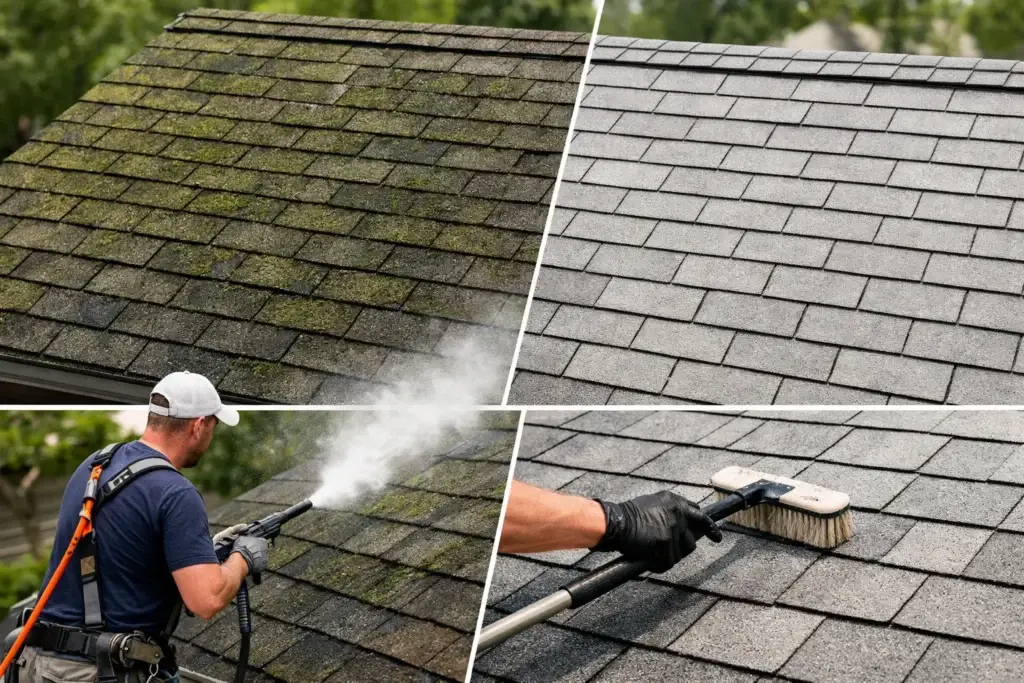
Those black streaks spreading down an asphalt roof are usually not dirt. They are typically algae, and they can make a well-kept home in Connecticut look older than it is. Knowing how to remove algae from shingles safely matters because the wrong approach can strip protective granules, shorten roof life, and turn a cosmetic issue into an expensive repair.
The good news is that roof algae can usually be treated without replacing shingles. The key is using a low-pressure cleaning method, the right solution, and careful protection for landscaping and exterior surfaces below.
What Causes Algae on Roof Shingles?
The dark staining seen on many roofs is commonly caused by Gloeocapsa magma, a type of airborne algae that feeds on the limestone filler in asphalt shingles. It thrives where moisture lingers, especially on shaded roof slopes, beneath overhanging trees, and in humid coastal areas.
Algae does not always mean a roof is failing. However, it should not be ignored. Thick buildup can hold moisture against the shingle surface and hide other conditions that deserve attention, including moss, lichen, damaged flashing, or lifted shingles.
Algae is often confused with moss. The difference matters. Algae creates dark, streaky stains. Moss is green and has a visible, cushion-like texture. Lichen tends to look crusty or pale green. Moss and lichen can be more aggressive because their root-like structures may work beneath shingle edges. All three require a gentle cleaning process.
How to Remove Algae From Shingles Without Damage
For most asphalt shingle roofs, soft washing is the safest and most effective method. Soft washing uses a specialized cleaning solution applied at very low pressure. The solution treats the algae rather than blasting it away.
A proper roof cleaning starts with an inspection. Before any cleaning begins, check for loose shingles, failing flashing, cracked vents, damaged gutters, and areas where the roof may already be compromised. A cleaning crew should also identify sensitive landscaping, nearby painted surfaces, and outdoor fixtures that need protection.
Next, wet the plants, grass, and surrounding areas thoroughly. This step is not optional. Roof cleaning solutions can harm vegetation when applied carelessly, so professional crews pre-soak landscaping, control runoff, and rinse throughout the service.
The cleaning solution is then applied evenly to affected shingle areas at low pressure. It begins breaking down the algae on contact. Streaks often lighten quickly, though heavy staining may continue to fade as the treatment works. Moss and lichen usually need more time to release naturally. Scraping or aggressively brushing them off can dislodge shingle granules, so patience protects the roof.
After treatment, a controlled rinse may be used when appropriate for the roof and cleaning method. In many cases, the treatment is left to work without heavy rinsing. The exact process depends on the roof’s age, shingle condition, slope, amount of growth, and manufacturer guidance.
Never Pressure Wash Asphalt Shingles
Pressure washing is excellent for concrete, some decks, and durable hard surfaces. It is not the right tool for asphalt shingles.
A high-pressure stream can remove the protective granules embedded in shingles. Those granules help shield the roof from ultraviolet exposure and weather. Once they are stripped away, shingles can age faster, lose color, and become more vulnerable to cracking and leaks.
Pressure can also force water under shingles, around vents, and beneath flashing. That creates a risk that is not always visible from the ground. A roof may look cleaner for the moment while water has been pushed into places it does not belong.
If a contractor suggests pressure washing your shingle roof, ask about their process before agreeing to the work. Safe roof cleaning should rely on low pressure and a solution designed to treat organic staining, not on force.
Is DIY Roof Cleaning a Good Idea?
Some homeowners choose to clean a small, low-slope roof themselves. It can be done carefully, but the trade-offs are real. Roofs are slippery when wet, cleaning products require proper handling, and one misplaced step can damage shingles or cause a serious fall.
DIY cleaning is especially risky when the roof is steep, tall, heavily stained, covered with moss, or difficult to access. It is also not a good project if gutters are unstable, shingles are brittle, or you are unsure whether the staining is algae, mold, or another roof issue.
If you decide to handle a limited area yourself, use a roof-safe cleaner according to its label, wear proper fall protection, protect plants first, and apply the product with a low-pressure sprayer. Do not use a pressure washer, wire brush, stiff broom, or abrasive scrub pad. Avoid walking on hot shingles, and never work alone.
For many homeowners, professional service is the more practical choice. Licensed and insured roof cleaning technicians have the equipment to apply treatment evenly, manage runoff, work safely at height, and protect the property while they clean.
What to Expect From Professional Soft Washing
A professional roof cleaning should feel straightforward. After assessing the roof and providing a clear estimate, the crew prepares the work area by protecting plants and exterior features. They apply a measured cleaning solution at low pressure, monitor runoff, and rinse surrounding vegetation as needed.
The roof should not be aggressively scrubbed or blasted. A qualified team will explain that stubborn moss and lichen may not disappear instantly. The treatment kills the growth, while time and weather help loosen the remaining material. This is safer than forcing it off and damaging the shingles.
At CT Softwash LLC, roof cleaning is approached as property protection, not just a quick cosmetic fix. The goal is to remove the staining safely while preserving the shingle surface and leaving the surrounding home and landscaping cared for.
How Often Should You Clean Roof Algae?
There is no single schedule for every home. A sunny, open roof may stay clean for years, while a shaded roof near trees may need treatment more often. In New London County and nearby shoreline communities, humid weather, tree cover, and seasonal debris can encourage recurring growth.
A visual check once or twice a year is usually enough. Look for new dark streaks, green patches, debris trapped in roof valleys, and branches touching or hanging close to the roof. Catching algae early makes cleaning easier and reduces the chance that moss or lichen takes hold.
Routine gutter cleaning also helps. When gutters overflow, water can back up near the roof edge and keep nearby materials damp. Trimming branches to improve sunlight and airflow can make a noticeable difference as well, provided trimming is done safely and without damaging the tree.
Preventing Algae From Coming Back
No cleaning method can guarantee that algae will never return, particularly on shaded roofs. Still, a few maintenance choices can slow it down. Keep gutters clear, remove leaf buildup from valleys, and reduce heavy shade where practical. Address roof ventilation concerns if moisture seems to linger in the attic or along the roof deck.
Some homeowners also consider algae-resistant shingles when it is time for a roof replacement. These shingles contain materials that help limit algae growth. They are a long-term prevention option, not a reason to replace an otherwise sound roof solely because of staining.
Avoid installing loose strips of metal as a quick fix unless your roofer recommends them. Copper and zinc can help discourage algae in some situations, but installation needs to be compatible with the roof system and local conditions.
When to Call a Roof Cleaning Professional
Call a professional when algae covers a large section of the roof, the home has more than one story, the roof is steep, or moss and lichen are present. It is also wise to schedule an inspection if you notice missing granules, curling shingle edges, soft roof areas, active leaks, or water stains inside the home. Cleaning will not repair underlying roof damage.
A clean roof makes a strong difference in curb appeal, but the bigger benefit is avoiding a risky cleaning attempt that damages the surface you are trying to protect. Treat algae early, use soft washing rather than pressure, and let trained professionals handle the work when safety or roof condition is in question.