
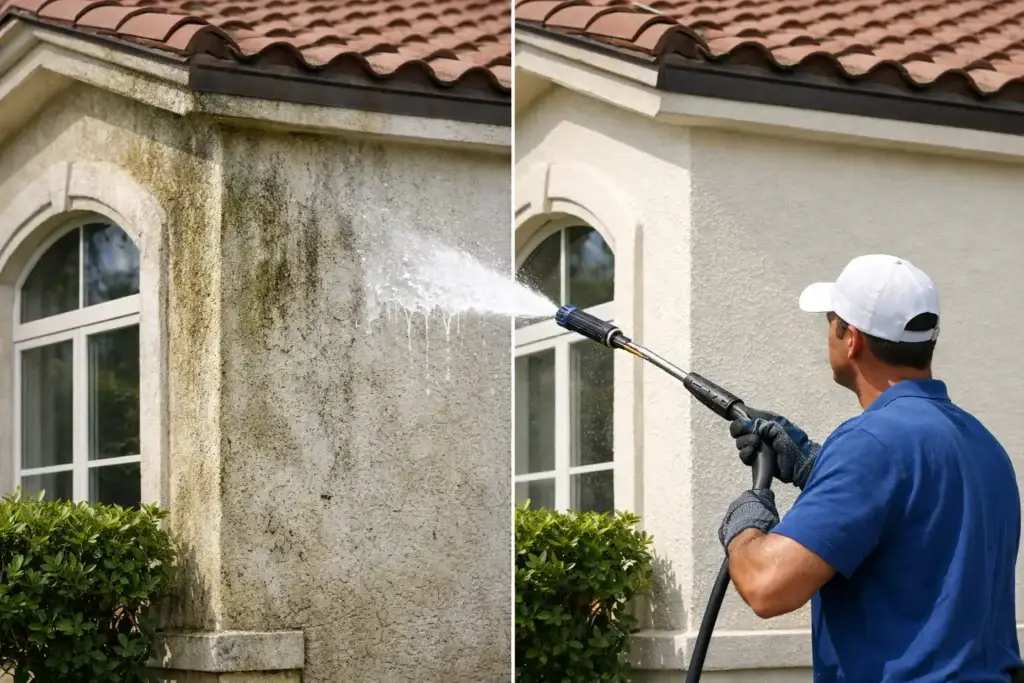
Stucco can look clean one season and streaked, green, or chalky the next. If you are figuring out how to soft wash stucco siding, the goal is simple – remove organic growth and surface staining without blasting the finish apart.
That matters more with stucco than with tougher materials like vinyl. Pressure that seems moderate on a washer can leave etching, gouges, broken edges, and water intrusion behind. Soft washing is the safer method because it relies on cleaning solution, dwell time, and controlled rinsing instead of brute force.
Why stucco needs a soft wash approach
Stucco is durable, but it is not indestructible. Traditional high-pressure washing can force water into cracks, around windows, and behind the surface. On painted stucco, too much pressure can strip the coating. On older stucco, it can open weak areas that were already close to failing.
Soft washing works better because most of what you see on dirty stucco is biological growth, not just loose dirt. Algae, mildew, mold, and bacteria need to be treated, not just rinsed. A proper wash solution kills that growth at the source, which helps the siding stay cleaner longer.
There is one trade-off. Soft washing is gentler, but it still has to be done carefully. The wrong chemical strength, poor plant protection, or too much dwell time on a hot wall can create a different set of problems.
How to soft wash stucco siding without causing damage
Start by inspecting the surface before you mix anything. Look for cracks, crumbling spots, loose sealant, failing paint, rust stains, and heavy oxidation. If the stucco is damaged, cleaning should not come before repairs. Washing over open cracks can push water where it should not go.
Next, check the weather. A mild, overcast day is ideal. If the wall is hot from direct sun, cleaning solution can dry too fast and leave uneven results. Wind also makes the job harder because it can carry overspray onto plants, windows, and nearby surfaces.
Before applying any cleaner, soak surrounding landscaping with fresh water and keep it wet throughout the job. Cover delicate plants if needed, but do not leave them wrapped tightly in plastic for long in the heat. Close windows and doors, move outdoor furniture, and pre-rinse the wall to remove loose debris.
The cleaning setup should stay low pressure from start to finish. That usually means a soft wash system or a pressure washer configured to apply soap and rinse at very low output. The key is not the machine size. It is the pressure at the surface. Stucco does not need force. It needs control.
For most organic staining, a soft wash mix is built around water, a surfactant, and sodium hypochlorite in the proper ratio. The surfactant helps the solution cling to the wall instead of running off immediately. The sodium hypochlorite does the actual treatment work on mold, mildew, and algae. Stronger is not always better. On stucco, an overly hot mix can affect paint, dry too fast, or create unnecessary risk around adjacent surfaces.
Apply the solution evenly from the bottom up to reduce streaking. Let it dwell long enough to work, but do not let it dry on the surface. You may need a second light application on heavily stained areas, especially on shaded sides of the home where growth has had time to build up.
After dwell time, rinse thoroughly with low pressure. Keep the nozzle distance consistent and avoid concentrating water in one small area. Think of it as flushing the surface, not blasting it clean. If a stain does not come off with soft washing, forcing it with more pressure is usually the wrong next move.
The tools and cleaners that make the difference
A lot of homeowners assume the pressure washer is the main tool. On stucco, it is really the least important part of the equation. What matters more is having the right chemical application method, a dependable surfactant, and enough hose reach to work safely from the ground where possible.
A soft bristle brush can help in isolated spots, but scrubbing all of the stucco is rarely necessary and can wear the finish if done aggressively. Rust, efflorescence, and irrigation stains may need specialty treatment that is completely different from what you would use for algae or mildew. This is where many DIY jobs go sideways. One stain does not equal one solution.
Painted stucco also changes the approach. If the paint is already fading, peeling, or chalking, cleaning may reveal more of that wear rather than fix it. In those cases, soft washing is still the right method, but expectations need to be realistic. Cleaning restores the surface. It does not reverse coating failure.
Common mistakes when soft washing stucco siding
The biggest mistake is using too much pressure because the wall still looks dirty after the first rinse. That usually means the solution did not have enough dwell time, the mix was not right for the stain, or the staining is mineral-based rather than organic.
Another common mistake is washing damaged stucco before it is repaired. Water finds weak points fast. Small cracks around trim, vents, and windows can become bigger issues when they are saturated repeatedly.
Skipping plant protection is another expensive error. Even a well-mixed solution can harm landscaping if you are careless. Pre-wetting, rinsing during the job, and final rinsing afterward are not optional.
The last one is trying to clean in the middle of a hot afternoon. In Connecticut summers, walls can heat up quickly, especially on sun-facing sides. When cleaner dries too fast, performance drops and streaking becomes more likely.
When DIY makes sense and when it does not
If your home has light mildew on a small section of accessible stucco, and you already understand chemical handling, DIY can be reasonable. The wall should be in solid condition, the growth should be minor, and you should have a true low-pressure setup, not a plan to “just be careful” with a standard pressure washer wand.
For larger homes, second-story areas, painted stucco, or heavy staining, professional service is usually the safer move. The difference is not just labor. It is knowing how to read the surface, match the solution to the stain, protect surrounding materials, and clean thoroughly without creating damage that costs far more than the wash itself.
That is especially true if your property has landscaping close to the home, oxidation on painted areas, or signs of previous patch repairs. Those details change the process.
How often should stucco be soft washed?
Most stucco homes do well with cleaning every one to three years. It depends on shade, moisture, tree cover, nearby irrigation, and the amount of organic buildup your property deals with. Homes near the coast or in humid areas often need attention more often because moisture lingers longer.
If you are seeing green streaks, black spotting, spider webs, bug residue, or dingy discoloration on the north side of the house, it is time. Waiting too long usually means more staining, not better value.
What good results should look like
A proper soft wash should leave stucco brighter, more even in color, and free of organic growth without visible damage. You should not see pressure lines, etched areas, chipped edges, or blown-out caulking. The finish should look refreshed, not roughed up.
You may still notice permanent stains if they are caused by rust, hard water, or age-related discoloration. A trustworthy cleaner will tell you that upfront instead of promising a perfect reset on every wall.
For homeowners who want the safest path, the best approach is simple: treat stucco like a finish that needs to be preserved, not a surface that needs to be overpowered. If you want clean siding without the risk, a professional soft wash is often the fastest way to protect both your curb appeal and the walls underneath.