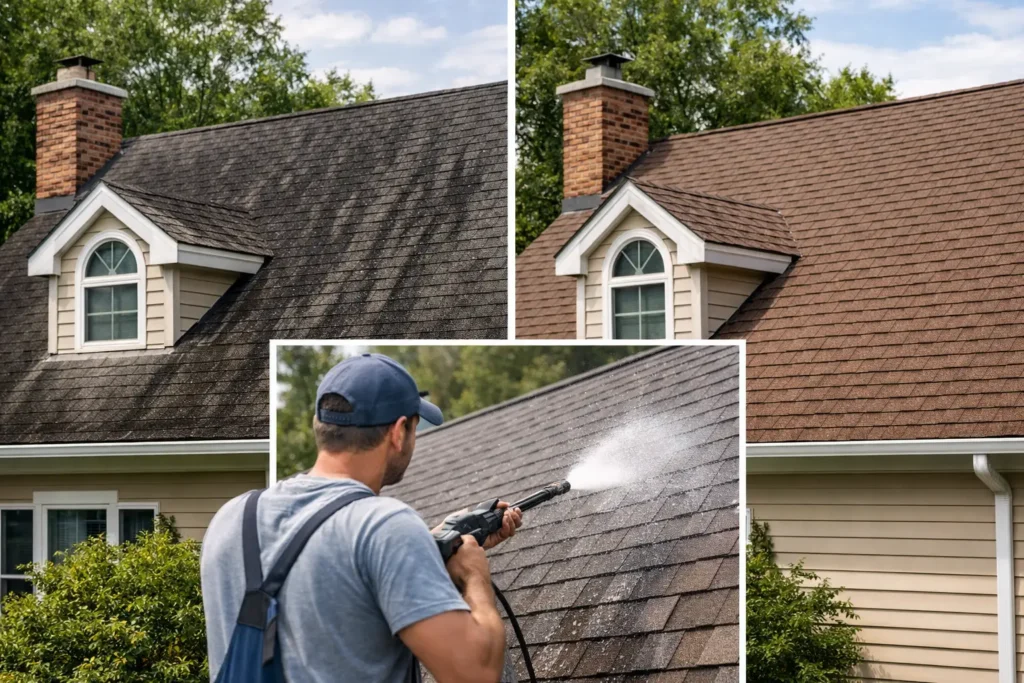
The black streaks had been there so long the homeowner thought they were permanent. From the street, the roof looked older than it was. The siding was clean, the yard was maintained, but the roof pulled the whole property down. This roof stain removal success story started the way many do in Connecticut – with a homeowner who was tired of looking at the stains and even more tired of hearing conflicting advice about how to remove them.
What made the difference was not a magic product or a rushed wash. It was using the right method for the roofing material, treating the actual cause of the staining, and avoiding the common mistake that creates expensive damage – blasting shingles with high pressure.
What the stains really were
Most roof streaks are not just dirt. In many cases, those dark lines come from algae growth, especially on asphalt shingle roofs. Moisture, shade, tree cover, and humid weather give that growth a chance to spread. Over time, the roof starts to look uneven, worn out, and neglected even when the shingles still have useful life left.
That distinction matters. If the problem is organic staining, a cosmetic rinse will not solve it. You need a cleaning process that kills the growth, lifts the staining, and does it without stripping granules or shortening the life of the roof.
For this homeowner, the concern was simple. They wanted the roof to look clean again, but they did not want to risk damage. That is exactly where many property owners get stuck. They know the roof looks bad, but they are unsure whether cleaning it will help or make things worse.
Why this roof stain removal success story matters
A stained roof is not just about appearance. It affects first impressions, perceived home value, and often the way the entire property is judged. If you are planning to sell, host family, or just want your home to look cared for again, roof staining becomes hard to ignore.
There is also a maintenance side to it. When algae and buildup sit on a roof year after year, moisture retention becomes part of the problem. Not every stained roof is facing immediate structural trouble, but ignoring buildup rarely helps. Cleaning at the right time can be a smart part of preventive care.
In this case, the homeowner had already considered trying it themselves. They looked into store-bought cleaners and watched a few videos showing pressure washers being used on roofs. That would have been the wrong move. Asphalt shingles are built to shed water, not take a direct beating from concentrated pressure. Once granules are loosened or lifted, you cannot put them back.
The turning point: soft washing instead of pressure washing
The roof was cleaned with a soft washing approach, which is the safest and most effective option for most residential roofs with algae staining. Instead of relying on force, soft washing uses specialized cleaning solutions and low-pressure application to break down organic growth and remove the discoloration at its source.
That difference is not minor. Pressure washing tries to overpower the stain. Soft washing treats it. The result is a cleaner roof without the unnecessary wear that comes from aggressive methods.
Before any cleaning started, the roof condition had to be assessed. That includes looking at the shingle type, the age of the roof, the severity of the staining, nearby landscaping, runoff control, and any areas that need extra care. A professional approach starts with protection, not spraying.
The surrounding plants were prepped, the application was controlled, and the cleaning solution was allowed time to do the work. That patience is part of why professional results last longer. Fast does not always mean better, especially on a roof.
What changed after the cleaning
The visual difference was immediate. The black streaks were gone, the roof color looked consistent again, and the home looked newer from the curb. That is usually the first reaction homeowners have after a proper roof cleaning – they forgot how good the roof was supposed to look.
But the bigger win was peace of mind. The homeowner did not just get a better-looking house. They got confirmation that the roof could be restored safely without damage. For many people, that is the real obstacle. They are not only worried about the stains. They are worried about making a bad situation worse.
This is where a true roof stain removal success story stands out. It is not just before-and-after appearance. It is a result that solves the problem while protecting the surface underneath.
Why DIY roof cleaning often goes wrong
Some homeowners can handle a lot on their own. Roof cleaning is different. The risk is not only chemical handling or ladder safety, although those are serious concerns. The bigger issue is using the wrong technique on a material that is easy to damage.
A consumer-grade pressure washer in the wrong hands can remove granules, force water under shingles, and shorten the roof’s lifespan. On top of that, many off-the-shelf cleaners are either too weak to treat heavy staining or too harsh when misused. What looks like a cheaper option can turn into a costly repair.
There is also the issue of incomplete cleaning. If the visible stain lightens but the algae is not fully treated, the problem can come back quickly. A roof that looks better for a month but streaks again shortly after was never really cleaned the right way.
When roof stain removal is worth it
It depends on the age and condition of the roof. If a roof is already failing, cleaning is not a substitute for replacement. If shingles are brittle, missing, heavily curled, or near the end of their service life, a professional inspection matters more than appearance alone.
But many roofs are stained long before they are worn out. In those cases, removal is absolutely worth considering. It can restore curb appeal, extend the clean look of the property, and help homeowners avoid replacing a roof that still has life left.
That is a practical point many people miss. A stained roof can make a house look much older than it is. Cleaning it can change the way the entire property presents without the cost of major exterior work.
What homeowners should look for in a roof cleaning company
If you are comparing providers, ask how they clean roofs. That question should come before price. The right company should be clear about using a low-pressure soft washing process for asphalt shingles and should explain how they protect the roof and surrounding property.
You should also look for a licensed and insured contractor with a track record of exterior cleaning work, not a company guessing their way through it. Roof cleaning is a specialty service. The equipment, treatment process, and surface knowledge matter.
A good company should also set realistic expectations. Some stains clear up immediately. Others continue improving as the treatment finishes its work. A trustworthy contractor explains what to expect instead of overpromising instant perfection on every roof.
For homeowners in shoreline and inland Connecticut communities, where moisture and seasonal buildup are common, this kind of service is not cosmetic fluff. It is routine exterior maintenance done correctly.
The lesson from this roof stain removal success story
The lesson is simple. Roof stains are often fixable, but the method matters more than the stain itself. If you clean a roof the wrong way, you can trade a cosmetic problem for a structural one. If you clean it the right way, you can restore the look of the home without putting the shingles at risk.
That is why so many homeowners feel relieved after seeing the results. They expected a cleaner roof. What they got was a house that looked cared for again, a safer alternative to DIY trial and error, and confidence that the job was done professionally.
CT Softwash LLC sees this pattern often. Homeowners wait because they think the stains are permanent or because they are worried about damage. Then the roof is cleaned correctly, and the result feels bigger than they expected.
If your roof has dark streaks, patchy discoloration, or that worn look that drags down the rest of your property, the next step does not have to be complicated. A professional assessment can tell you whether the roof should be cleaned, how it should be treated, and what kind of result you can realistically expect. Sometimes the smartest exterior upgrade is not replacing anything at all. It is restoring what is already there.