
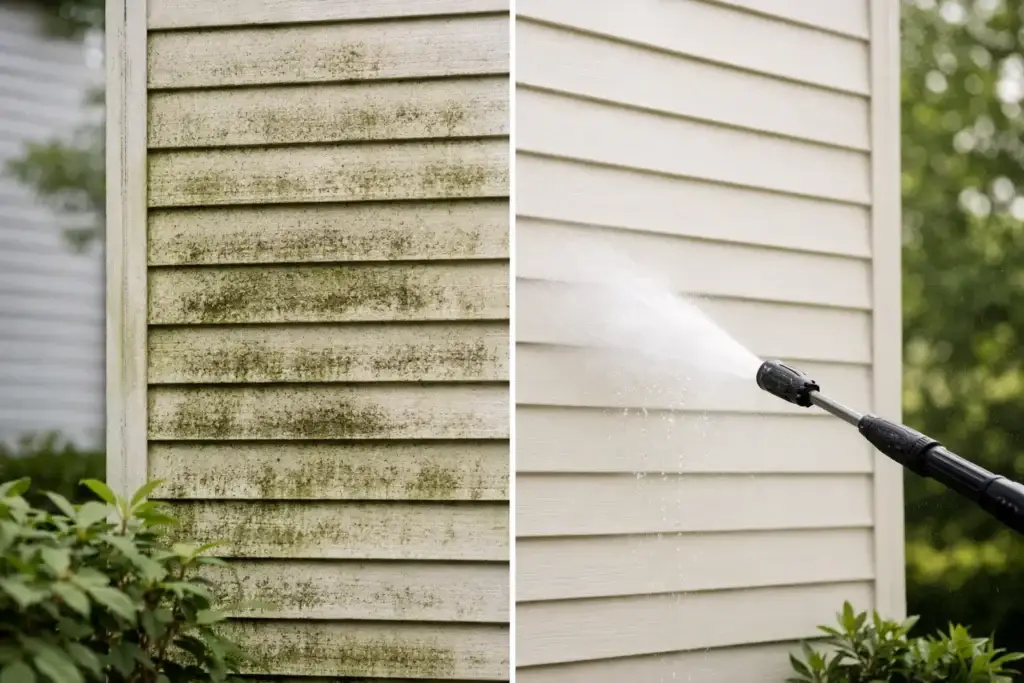
That green film creeping up the shady side of your house is not just an eyesore. Mold and mildew removal from siding matters because those stains usually mean moisture is sticking around longer than it should. Left alone, the problem can spread, make your home look neglected, and in some cases shorten the life of the surface underneath.
In Connecticut, this shows up all the time on north-facing walls, under gutters, behind shrubs, and anywhere humidity lingers. Homeowners often assume a stronger cleaner or more pressure is the answer. Usually, it is the opposite. The safest results come from using the right cleaning method for the material, not the most aggressive one.
Why mold and mildew show up on siding
Mildew and algae thrive where moisture, shade, and organic buildup collect. Pollen, dirt, and tree debris give growth something to hold onto, while damp conditions help it spread. If your home has older siding, nearby trees, clogged gutters, or poor drainage, stains can appear faster and come back more often.
Not every dark mark is the same thing. Mildew often looks powdery or patchy. Algae usually appears as green or black staining. Mold can be darker and more embedded, especially around seams and trim. For most homeowners, the distinction matters less than the cleaning approach. You want to kill the growth, remove the staining, and do it without damaging the siding.
The biggest mistake in mold and mildew removal from siding
The most common mistake is treating siding like concrete. Vinyl, painted wood, stucco, and fiber cement all react differently to water pressure and harsh chemicals. High-pressure washing can force water behind panels, strip paint, dent softer materials, and leave visible lines if handled poorly.
This is why soft washing is usually the better choice for siding. Instead of relying on brute force, soft washing uses low pressure and cleaning solutions designed to break down organic growth at the source. That means the surface gets cleaned more thoroughly with far less risk.
If you have stubborn buildup, more pressure is not always better. Sometimes stubborn staining means the organic growth has been there a long time, or the siding has oxidation, sun fading, or old residue that needs a different treatment.
How to remove mold and mildew from siding safely
If you are handling a small section yourself, start with a simple rule: test first. Pick an inconspicuous area and make sure the siding responds well before cleaning the whole wall. This is especially important on older vinyl, painted surfaces, and any siding with visible wear.
For light buildup, a siding-safe cleaning solution and a soft brush or low-pressure sprayer can work. Let the cleaner dwell long enough to do the job, but do not let it dry on the surface. Then rinse thoroughly with low pressure. In many cases, patience matters more than force.
Protect nearby plants before you begin. Pre-rinse landscaping, cover delicate flowers if needed, and rinse everything again after cleaning. Also close windows tightly and avoid overspray near outdoor electrical fixtures.
What you should not do is mix random household chemicals, scrub aggressively with abrasive tools, or blast the siding from close range with a pressure washer. Those shortcuts often turn a cleaning issue into a repair issue.
Best approach by siding type
Vinyl siding responds well to soft washing when the cleaner is applied correctly and rinsed evenly. It is durable, but it can still crack, loosen, or allow water intrusion if pressure is too high.
Painted wood needs more caution. Mold and mildew may sit on the surface, but older paint can lift if the cleaning is too aggressive. If the finish is already failing, cleaning may reveal areas that need repainting rather than restore a uniform look.
Fiber cement is tough, but not indestructible. It generally benefits from low-pressure cleaning and proper detergents, especially around joints and caulked areas.
Stucco and other textured surfaces can trap growth deep in the finish. These surfaces often require more dwell time and careful rinsing. Too much pressure can scar the surface or drive water where it should not go.
When DIY works and when it does not
DIY mold and mildew removal from siding can work when the affected area is small, the staining is light, and you have safe access from the ground. It also helps if you know what your siding material is and have the patience to clean it the right way.
Professional service makes more sense when staining covers multiple elevations, reaches higher stories, keeps returning, or sits on delicate surfaces. It is also the safer option when ladders are involved or when you are dealing with mixed materials like siding, trim, gutters, and painted surfaces that all need different handling.
A good exterior cleaning company is not just showing up with a machine. They should understand surface chemistry, pressure control, runoff management, and how to clean for lasting results instead of just making the house look better for a week.
Signs you should call a professional
If stains return quickly after cleaning, there may be an underlying moisture issue. If the siding looks chalky, faded, or brittle, it may need a gentler process than standard DIY products allow. And if you notice growth spreading near soffits, gutters, or roof edges, cleaning the wall alone may not solve the problem.
For many Connecticut homeowners, the real value of professional house washing is reducing risk. You avoid accidental damage, save time, and get a more even result across the whole home.
How to keep mold and mildew from coming back
Cleaning is only part of the fix. Prevention makes the results last longer.
Start with moisture control. Keep gutters clear, direct downspouts away from the foundation, and trim back shrubs or tree limbs that keep siding damp. If sprinklers hit the house regularly, adjust them. Those small changes make a noticeable difference.
Routine maintenance also helps. A home does not need to look heavily stained before it needs washing. In fact, periodic soft washing often prevents the deep buildup that becomes harder and more expensive to remove later. Homes in shaded, coastal, or heavily wooded areas usually need more frequent attention than homes with full sun and good airflow.
It also helps to catch small issues early. A loose gutter, a leaking spigot, or missing caulk around trim can create the damp conditions mold and mildew love. Cleaning the siding without fixing the source means you may be right back in the same spot next season.
What to expect from professional mold and mildew removal from siding
A professional service should start with an inspection, not a guess. The right crew will look at the siding material, the severity of the growth, access points, plant protection needs, and any areas where water intrusion could be a concern.
From there, the process should be straightforward. The siding is treated with the proper cleaning solution, allowed time to break down organic growth, then rinsed with controlled pressure. Heavily affected areas may need extra attention, but the goal stays the same: clean the surface thoroughly without harming it.
You should also expect clear communication. That means honest pricing, realistic scheduling, and a simple explanation of what is being cleaned and why one method is being used over another. CT Softwash LLC built its reputation on that kind of straightforward service because homeowners want results they can see without the stress of wondering whether their property is being handled correctly.
Is it worth cleaning or should you replace the siding?
Most of the time, staining alone does not mean replacement is necessary. Many homes look dramatically better after proper washing, even when the siding has not been cleaned in years. That said, cleaning can reveal problems that were hidden under grime, such as cracked panels, failed paint, warped boards, or water damage.
This is where experience matters. A trained eye can tell the difference between surface contamination and material failure. If the siding is structurally sound, cleaning is usually the most cost-effective first step. If the surface is already compromised, cleaning may still improve appearance, but repairs could be part of the bigger picture.
A clean exterior changes more than curb appeal. It helps protect your investment, makes routine maintenance easier, and gives you a clearer view of the home’s actual condition. If mold and mildew are showing up on your siding, the right next step is not more pressure. It is a safer cleaning plan that solves the problem without creating a new one.