A driveway can go from dull gray to almost new-looking in a single visit, but that does not mean every exterior surface should be blasted with high pressure. That is where homeowners get tripped up. Power washing is incredibly effective when it is matched to the right material, the right pressure, and the right cleaning method.
For Connecticut property owners, that distinction matters. Our weather leaves behind algae, mildew, salt, pollen, dirt, and organic buildup that can make a home or commercial building look neglected long before anything is actually worn out. The right exterior cleaning can restore curb appeal fast. The wrong approach can leave etching, stripped paint, damaged wood, or water forced into places it should never go.
Where power washing works best
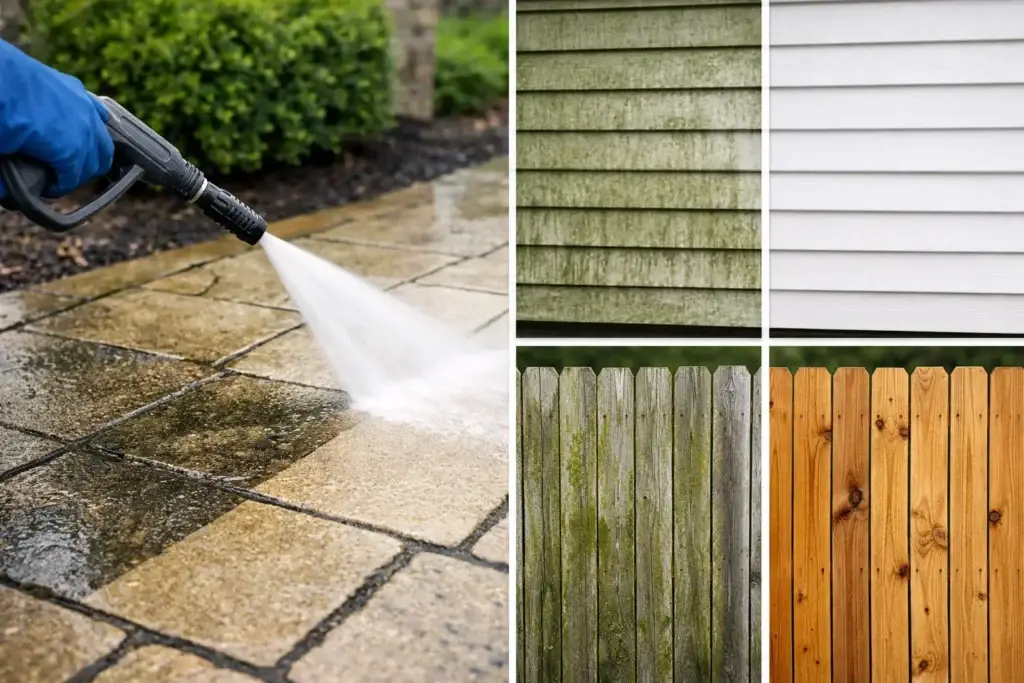
Power washing is best for hard, durable surfaces that can handle force without damage. Think concrete driveways, sidewalks, patios, retaining walls, some masonry, parking areas, and other dense exterior materials. These surfaces tend to collect heavy grime, black streaks, rust stains, tire marks, algae, and slippery buildup. High-pressure cleaning cuts through that fast and leaves a very noticeable difference.
Driveways are one of the clearest examples. Oil residue, dirt, leaf staining, and mildew settle into concrete over time, especially in shaded or damp areas. A proper cleaning lifts that buildup and brightens the whole front of the property. The same goes for walkways and front entries. Cleaner concrete does not just look better. It can also improve traction by removing slick organic growth.
Patios and pool surrounds are another good fit, depending on the surface. Concrete and some pavers often respond well to professional pressure cleaning, especially when there is ground-in dirt or green growth between seasons. If the area has heavy staining, the process may also include targeted treatment rather than relying on pressure alone.
Commercial properties benefit for the same reason. Storefront sidewalks, dumpster pad areas, loading zones, and entryways collect constant traffic-related buildup. In those settings, power washing is as much about appearance as it is about cleanliness and safety.
When power washing is the wrong choice
This is the part many homeowners are not told. Power washing is not a universal answer.
Vinyl siding, painted wood, stucco, roof shingles, older decks, fencing, and many decorative exterior surfaces usually need a lower-pressure approach. Too much force can gouge wood, strip paint, crack brittle siding, loosen window seals, and shorten the life of roofing materials. On a roof, especially, pressure can do more harm than the stains ever did.
That is why soft washing matters. Soft washing uses specialized cleaning solutions and low pressure to break down algae, mold, mildew, and grime without beating up the surface. It is the safer option for house washing and roof cleaning, and it often delivers a longer-lasting clean because it treats the biological growth at the source instead of just rinsing the surface.
A good contractor should not show up with one machine and one answer for everything. The method should fit the surface. If it does not, that is a red flag.
Power washing vs. soft washing
Homeowners often use these terms interchangeably, but they are not the same service.
Power washing generally refers to high-pressure cleaning used on hard surfaces that can take it. It is ideal for concrete, certain stone areas, and other durable exterior materials. The goal is to remove heavy buildup quickly and thoroughly.
Soft washing is a lower-pressure cleaning process designed for more delicate surfaces. Instead of relying on force, it relies on proper detergents and controlled application. That makes it a better choice for siding, roofing, painted exteriors, and trim.
Neither method is automatically better than the other. It depends on what is being cleaned. If your driveway is stained and your siding is streaked with algae, you may need both methods on the same property. That is common.
What power washing can remove
When used correctly, power washing removes a surprising amount of buildup. Dirt and mud are the obvious ones, but most property owners call because of the darker stains that make surfaces look old or poorly maintained.
That includes algae, mildew, moss residue, black concrete streaking, embedded grime, leaf stains, and seasonal debris. In some cases, surface rust or automotive residue can also be improved, although not every stain disappears completely. That is one of the trade-offs worth being honest about. Professional cleaning can dramatically improve appearance, but the final result depends on the age of the stain, the material underneath, and whether the surface has permanent discoloration.
The good news is that most exterior buildup is much more removable than people think. What looks like permanent darkening is often years of organic growth and dirt layered over the original surface.
Why technique matters more than equipment
A lot of people assume the best results come from the most powerful machine. That is only partly true. Commercial-grade equipment helps, but technique is what protects the property and produces an even finish.
Pressure has to be adjusted based on the surface. Spray angle matters. Distance matters. So does the order of operations. Pre-treating organic growth, cleaning with the right pattern, and rinsing properly all affect the final result. On flatwork, uneven passes can leave visible striping. On siding or trim, poor aim can force water behind materials where it should not be.
This is also why do-it-yourself power washing often turns into a mixed bag. Some homeowners do a decent job on small concrete areas. Others end up with zebra-striped decks, etched concrete, damaged caulking, or splintered wood. Renting a machine is easy. Knowing how to clean safely is the harder part.
The best time to schedule power washing
Most properties benefit from exterior cleaning once a year, but that can vary.
Homes with a lot of shade, tree cover, moisture exposure, or nearby traffic may need more frequent service. Algae and mildew tend to return faster on north-facing surfaces and damp areas that do not get much sun. Commercial buildings with heavy foot traffic may also need more regular maintenance to keep entrances and common areas looking clean.
Spring is a popular time because it clears away winter residue and freshens up the property before the busiest outdoor months. Fall can also make sense, especially after summer humidity has encouraged growth on siding, concrete, and trim. If you are preparing to paint, sell, host an event, or simply catch up on deferred maintenance, timing the cleaning around that goal is usually more important than the exact month.
What homeowners should expect from a professional service
A professional power washing service should feel simple from the start. Fast quoting, clear scheduling, and a straightforward explanation of what will be cleaned all matter. You should know whether the company plans to use high pressure, soft washing, or a mix of both.
You should also expect realistic guidance. Not every stain will disappear 100 percent, and not every surface should be cleaned the same way. A reputable contractor will tell you where the biggest improvement is likely to happen and where a more cautious approach is necessary.
Licensed and insured service matters here too. Exterior cleaning looks simple from the curb, but there is real risk involved when ladders, roofs, chemicals, and high-pressure equipment are in play. Hiring trained professionals protects your property and gives you a much better chance of getting the result you actually want.
For homeowners in coastal and southeastern Connecticut, where moisture, salt air, and changing seasons put constant stress on exterior surfaces, regular cleaning is less about vanity and more about keeping buildup from turning into a bigger maintenance problem. That is one reason companies like CT Softwash focus on using the right method for each part of the property instead of treating every job the same way.
Is power washing worth it?
If the right surfaces are being cleaned the right way, yes. Power washing can restore appearance quickly, improve safety on slippery walkways, and help protect hard exterior surfaces from long-term grime buildup. It is one of the fastest ways to improve curb appeal without a major renovation.
The catch is simple. It works best when it is used where it belongs. Concrete, masonry, and other durable surfaces usually respond extremely well. More delicate materials need a softer touch.
The smartest approach is not asking whether power washing works. It is asking where it makes sense, where it does not, and whether the company doing the work knows the difference. That is usually what separates a clean property from an expensive mistake.
When your exterior starts looking tired, the goal is not more pressure. It is the right clean for the surface in front of you.