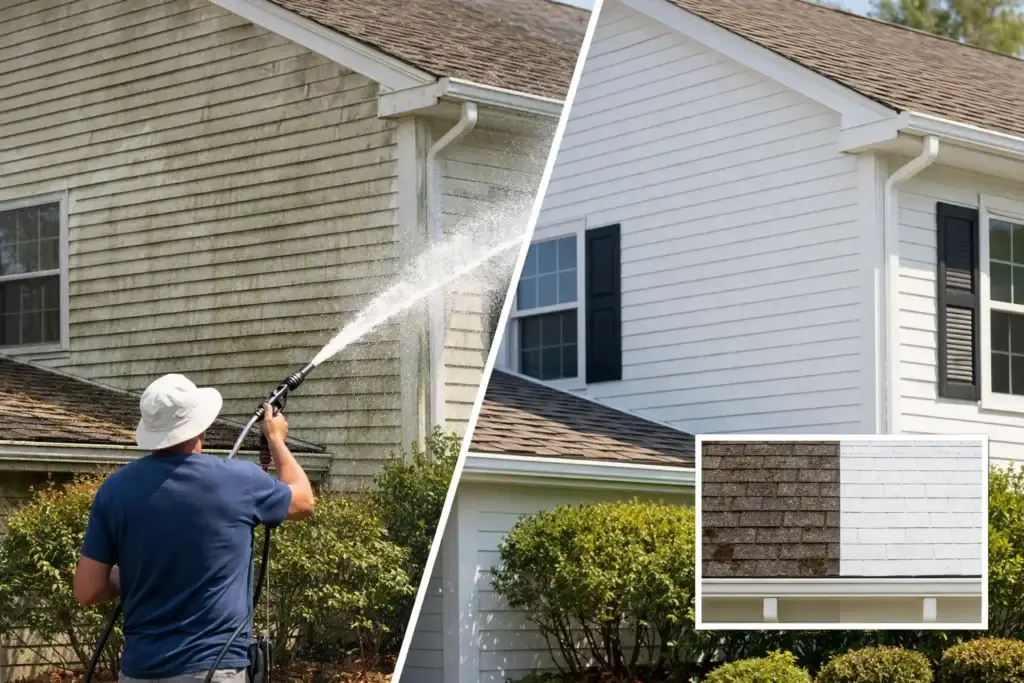
That green film on siding and those black roof streaks are not just cosmetic. They are usually signs of algae, mildew, mold, and grime building up over time. Soft washing is the safer way to treat that kind of growth because it cleans with low pressure and the right solutions instead of blasting surfaces with force.
For many homeowners, that difference matters more than anything else. A house can look dirty long before anything is technically broken, but the wrong cleaning method can create damage that was never there to begin with. If you want your home to look better without risking siding, shingles, trim, or painted surfaces, soft washing is often the right call.
What soft washing actually means
Soft washing is an exterior cleaning method that uses low-pressure water combined with specialized cleaning solutions to break down organic growth, stains, and surface buildup. It is commonly used on surfaces that can be damaged by high pressure, including vinyl siding, stucco, painted wood, roofing, fencing, and some deck materials.
The key idea is simple. Instead of trying to force dirt off with pressure alone, soft washing treats the source of the staining first. That matters because many of the worst-looking exterior stains are alive. Algae, mold, mildew, and bacteria do not just sit on the surface. They spread, hold moisture, and come back quickly if they are not properly treated.
This is why soft washing usually delivers a longer-lasting result than pressure alone on certain surfaces. It does more than rinse away what you can see. It targets what is causing the discoloration in the first place.
Soft washing vs pressure washing
A lot of property owners use these terms like they mean the same thing. They do not. Both are useful, but they are used for different jobs.
Pressure washing relies on stronger water pressure to remove dirt, stains, and debris from hard surfaces. It works well on concrete, some pavers, and other durable materials that can handle a more aggressive approach. Soft washing uses much lower pressure and leans on cleaning agents to do the heavy lifting.
That trade-off is important. High pressure can clean fast, but it is not the best choice for every material. On siding, roofing, and painted surfaces, too much force can strip finishes, drive water behind panels, loosen granules, or leave visible marks. Soft washing reduces that risk while still delivering a deep clean.
For most homes, the best exterior cleaning plan uses both methods where they make sense. A driveway may need pressure washing. A roof or house exterior may need soft washing. Good service is not about using one tool for every surface. It is about using the right one.
Where soft washing works best
Soft washing is especially effective anywhere organic growth is the main problem. That includes the shaded side of a house, areas under trees, damp trim lines, and roofing that shows dark streaking.
House siding is one of the most common applications. Vinyl, painted wood, composite siding, and other exterior materials can collect algae and mildew that make the whole home look older than it is. Soft washing cleans those surfaces thoroughly without the risks that come with excessive pressure.
Roof cleaning is another major use. Those black streaks on asphalt shingles are often caused by algae, not dirt. Trying to remove them with high pressure can shorten the life of the roof. Soft washing is the safer option because it treats the growth without the force that can damage shingles.
Fences, decks, soffits, gutters, and painted exterior surfaces may also be good candidates, depending on the material and condition. The right approach always depends on what is being cleaned and how much buildup is present.
Why homeowners choose soft washing
The biggest reason is protection. Exterior surfaces are expensive to repair and replace, and most homeowners are not looking for a cleaning method that comes with extra risk. Soft washing offers a better balance of results and surface safety.
It also improves curb appeal fast. A home with clean siding, a brighter roofline, and fewer stains simply looks better cared for. That matters if you are planning to sell, getting ready for guests, keeping up with neighborhood standards, or just tired of seeing buildup every time you pull into the driveway.
Then there is the maintenance side. Mold, algae, and mildew thrive in damp conditions, and Connecticut homes deal with plenty of moisture, shade, pollen, and seasonal debris. Letting that buildup sit too long can stain surfaces more deeply and make regular upkeep harder. Soft washing helps stop that cycle earlier.
What the process usually looks like
A professional soft washing service should start with a careful look at the property. Not every stain has the same cause, and not every surface can be treated the same way. Age, finish, material type, existing damage, and nearby landscaping all affect the process.
From there, the cleaning team prepares the area, applies the appropriate solution, allows it time to work, and then rinses with controlled low pressure. The exact mix and method depend on the surface and the type of growth being treated.
Done correctly, the process is straightforward for the customer. You get clear scheduling, a defined scope of work, and visible results without the mess and guesswork of trying to figure it out on your own.
The biggest mistake people make
The biggest mistake is assuming more pressure means better cleaning. It sounds logical, but in exterior washing, that is often where damage starts.
A homeowner renting a pressure washer may be able to brighten concrete or remove loose surface dirt. But on siding, roofing, and painted exterior surfaces, too much force can do more harm than good. Water can get behind materials. Protective finishes can be stripped. Older areas can be gouged or lifted.
There is also the issue of incomplete cleaning. If the visible stain is caused by algae or mildew, pressure may remove part of the surface discoloration without killing the growth underneath. That often leads to quick regrowth and frustration a few weeks or months later.
Is soft washing safe for plants and landscaping?
It can be, when handled correctly. This is one of those areas where experience matters. A trained crew should account for nearby plants, pre-wet or protect sensitive areas as needed, and use controlled application methods rather than careless overspray.
That does not mean every property is identical. Some landscaping is more delicate than others, and some jobs require extra precautions. A professional should be able to explain the plan clearly and answer questions before work starts.
How often should a home be soft washed?
There is no one-size-fits-all schedule. It depends on shade, moisture, tree cover, proximity to water, local climate, and how quickly organic growth returns. Some homes can go longer between cleanings, while others benefit from more regular maintenance.
In many parts of southeastern Connecticut and nearby coastal areas, moisture and humidity can speed up algae and mildew growth. Homes in shaded lots or near trees often show buildup sooner. If you wait until stains are heavy and obvious, cleaning may still work well, but staying ahead of the problem usually keeps the property looking better year-round.
Why professional service matters
Soft washing sounds simple because the pressure is low. The reality is that proper cleaning still depends on knowing what to apply, how long to let it work, how to protect surrounding areas, and when a surface should not be treated aggressively at all.
That is why many homeowners would rather hire a licensed and insured company than experiment on their own home. Professional equipment helps, but experience matters just as much. A reliable crew knows how to match the method to the surface, communicate clearly, and leave the property looking noticeably cleaner without creating a bigger problem.
For property owners who want fast quotes, reliable scheduling, and visible results, working with a specialist removes a lot of stress from exterior maintenance. CT Softwash LLC focuses on exactly that kind of service – safe cleaning, clear communication, and results that protect the surfaces you paid for.
When soft washing is the right choice
If the surface is delicate, painted, aged, or affected by mold, mildew, algae, or roof streaking, soft washing is usually worth serious consideration. If the problem is oil on concrete or years of embedded grime on a hard, durable surface, pressure washing may be the better fit. Sometimes the right answer is a combination of both.
The best cleaning plan is not the most aggressive one. It is the one that gets the result you want without adding risk you do not need.
A cleaner home should not come at the cost of damaged siding or a shortened roof life. When exterior stains start building up, the smart move is choosing a method that cleans thoroughly, protects your property, and keeps your home looking like it is cared for.