A driveway can look worn out long before it is actually worn through. Dark tire marks, green algae, winter grime, and oil spots can make solid concrete appear ready for replacement. That is why the choice between pressure washing versus driveway resurfacing deserves a closer look. One service removes what is sitting on the surface. The other is intended to improve or cover a surface that has physically deteriorated.
For Connecticut property owners, the right answer often comes down to one question: Is the problem dirt and staining, or is the concrete itself failing? Choosing correctly can save money, protect your property, and bring back the clean curb appeal you want without paying for work your driveway does not need.
Pressure Washing Versus Driveway Resurfacing: The Main Difference
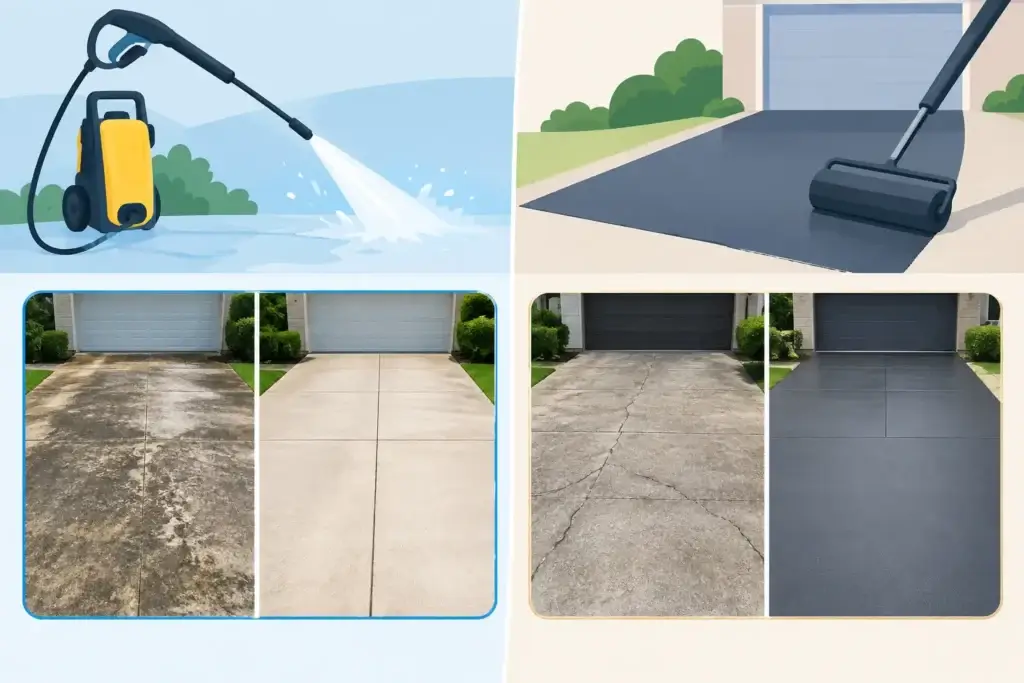
Pressure washing is a cleaning service. Professional equipment uses controlled water pressure and the right cleaning solutions to remove embedded dirt, algae, mildew, salt residue, surface grime, tire marks, and many common driveway stains. When done properly, it can dramatically brighten concrete, pavers, and other hard surfaces without altering the structure underneath.
Driveway resurfacing is a repair and restoration process. A contractor applies a new cement-based overlay or coating over existing concrete after preparing the surface and addressing suitable damage. It is designed to improve the appearance of worn, discolored, rough, or lightly damaged concrete. Depending on the product and preparation, resurfacing can create a more uniform finish and may allow for decorative options.
Put simply, pressure washing restores cleanliness. Resurfacing restores or changes the top layer of the driveway. A clean driveway may look almost new after washing, but cleaning cannot repair deep cracks, sinking slabs, crumbling edges, or major spalling. Resurfacing can improve an aging surface, but it is not a cure for serious structural movement beneath the driveway.
When Pressure Washing Is the Better Choice
If the concrete is intact but looks dull, dark, or stained, professional pressure washing is usually the first and most cost-effective step. Driveways in Groton, Mystic, Waterford, and throughout coastal Connecticut often collect moisture-driven algae and mildew, especially along shaded sections. Road salt, sand, fallen leaves, pollen, and rain runoff can also leave concrete looking uneven and neglected.
A professional cleaning is a strong fit when you are dealing with surface-level problems such as oil drips, tire marks, organic growth, mud, general discoloration, or slippery green buildup. It is also a smart move before listing a home, hosting an event, scheduling exterior painting, or simply improving curb appeal for the season.
The immediate visual change can be significant. Clean concrete reflects more light, looks more uniform, and makes landscaping and siding look better by comparison. More importantly, removing slippery algae and mildew can make walkways and driveway edges safer underfoot.
Pressure washing is also the right starting point if you are unsure how much damage is actually present. Dirt can hide hairline cracks, surface flaking, and problem areas. Once the driveway is clean, you can see its true condition and make a repair decision based on facts rather than a layer of grime.
That said, concrete should not be treated with a one-pressure-setting-fits-all approach. Excessive pressure, poor technique, or a homeowner-grade machine used too aggressively can leave wand marks, etch weak concrete, or worsen already deteriorating areas. Licensed and insured technicians use professional equipment, cleaning agents, and surface-specific methods to get visible results while protecting the material.
When Driveway Resurfacing Makes Sense
Resurfacing becomes worth considering when cleaning reveals cosmetic wear that goes beyond staining. Common examples include widespread surface roughness, shallow pitting, minor scaling, faded patches that remain after cleaning, and many small hairline cracks. A well-prepared overlay can give an older driveway a more consistent appearance without the expense of full removal and replacement.
However, resurfacing has limits. If the driveway has large or growing cracks, sections that have settled, drainage issues, heaving from freeze-thaw cycles, or crumbling concrete that extends beyond the surface, an overlay may not last. Those issues can continue moving underneath the new material and cause the resurfaced layer to crack or separate.
This matters in Connecticut, where winter moisture and repeated freezing can be hard on concrete. Water enters cracks, freezes, expands, and gradually makes small defects larger. A contractor should inspect whether the driveway is stable enough for resurfacing before recommending it. A less expensive repair is not a good value if it fails after a season or two.
Resurfacing also requires careful preparation. The driveway must be thoroughly cleaned, free of loose material, and properly profiled so the new material can bond. Oil contamination may need specialized treatment. In many cases, professional pressure washing is part of that preparation process. Applying an overlay over dirt, algae, loose concrete, or untreated stains is an invitation for adhesion problems.
Cost, Timing, and Long-Term Value
Pressure washing generally costs far less than resurfacing because it is a maintenance service rather than a construction project. For a driveway that is structurally sound, cleaning delivers one of the best curb-appeal returns available. It can also help you avoid unnecessary resurfacing by revealing that the “old” look was primarily caused by buildup.
Resurfacing costs more because it involves materials, repair preparation, labor, curing time, and a higher level of risk if the original concrete is unstable. It may still be more affordable than complete replacement, but it should be viewed as a repair investment, not simply a cleaning upgrade.
Timing matters as well. Pressure washing is usually completed quickly, with drying time depending on weather and the service performed. Resurfacing takes longer and requires suitable temperatures and dry conditions for proper installation and curing. If your goal is to freshen up the property before guests arrive or before putting it on the market, cleaning is often the practical first move.
For long-term value, think of pressure washing as routine exterior maintenance. Removing organic growth, corrosive salt residue, and accumulated grime helps you monitor the condition of your concrete and keeps the property looking cared for. Resurfacing is a targeted solution for a driveway that has moved beyond routine cleaning but is still stable enough to support an overlay.
A Clean-First Approach Usually Makes the Decision Easier
There is little downside to cleaning a sound driveway before deciding on larger work. Even if resurfacing is eventually necessary, a clean surface gives you and your contractor a clearer view of cracks, spalling, drainage patterns, and weak areas. It also ensures resurfacing decisions are based on actual concrete condition, not on stains that may disappear with professional cleaning.
At CT Softwash LLC, the goal is not to sell a bigger service than your property needs. A professional driveway cleaning can restore a surprising amount of color and contrast while helping you identify whether repairs should be the next step. For homeowners and commercial property owners, that straightforward approach keeps maintenance practical and predictable.
Signs You Should Call a Repair Contractor After Cleaning
A few isolated hairline cracks do not automatically mean replacement or resurfacing is required. Concrete naturally develops minor imperfections over time. But after the driveway is cleaned, look more closely for wider cracks, loose or flaking material, exposed aggregate, low spots that hold water, uneven slab sections, or cracks that appear to be spreading.
If you see these conditions, ask a qualified concrete repair or resurfacing contractor to evaluate the driveway. Cleaning can improve its appearance, but it should not be presented as a structural repair. A trustworthy provider will be clear about that distinction.
Your driveway does not have to be perfect to look well maintained. Start by removing the buildup that hides its real condition. If the concrete cleans up beautifully, you have protected your budget and improved curb appeal. If damage remains visible, you will know exactly where your next dollar should go.