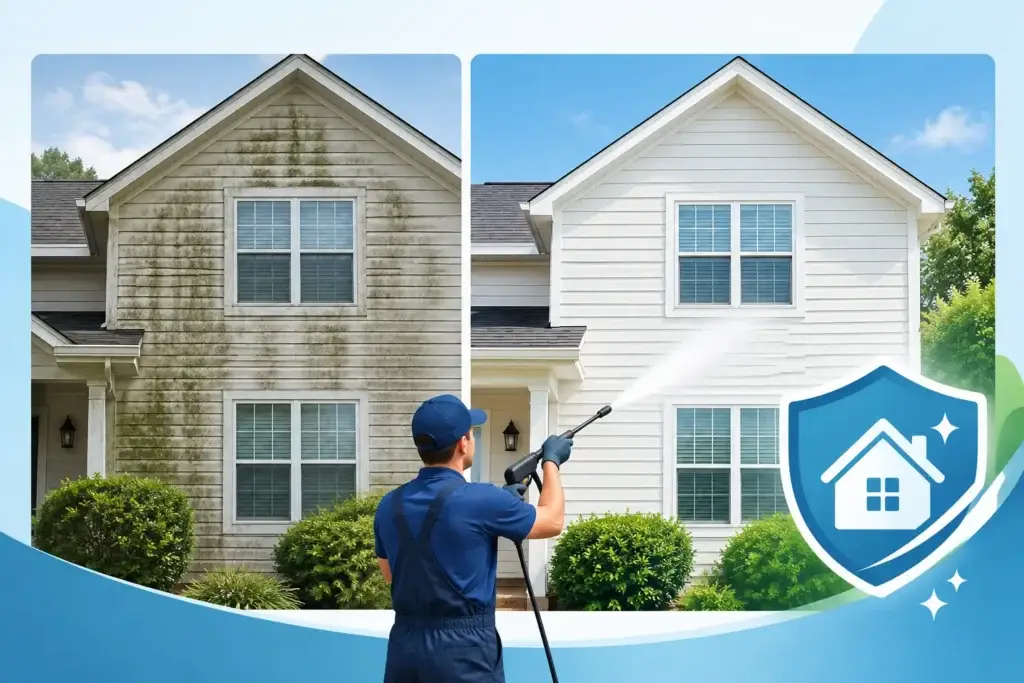
A building can look worn out long before it actually needs repairs. Green algae on vinyl, black streaks on roofing, mildew around shaded walls, and tire marks near entrances all make a property feel neglected. Professional building washing removes that buildup safely, restores a cleaner appearance, and helps property owners stay ahead of avoidable exterior maintenance.
For Connecticut homes and commercial properties, the right cleaning method matters as much as the visible result. A surface that looks tough may still be vulnerable to excessive water pressure, harsh scrubbing, or the wrong cleaning solution. The goal is not simply to make the building look brighter for a few days. It is to clean it thoroughly without creating damage that costs more to fix later.
What Building Washing Actually Removes
Exterior surfaces collect more than ordinary dirt. Moisture, shade, tree cover, traffic, pollen, and changing seasons create ideal conditions for algae, mold, mildew, lichen, and staining. On siding, this growth often starts as a faint green haze before spreading across larger areas. On concrete, it can leave dark patches that hold moisture and become slippery.
A complete building wash can address siding, trim, brick, stucco, painted surfaces, walkways, entry areas, patios, retaining walls, and other exterior features. The correct scope depends on the property. A waterfront home may have more salt residue and mildew exposure, while a commercial building near a busy road may need extra attention around concrete and storefront surfaces.
Cleaning also improves the appearance of paint, siding color, and architectural details that have been hidden under grime. That immediate curb-appeal improvement is valuable, but preventing long-term buildup is often the bigger benefit.
Building Washing Is Not Always High-Pressure Washing
Many property owners use the terms power washing, pressure washing, and soft washing interchangeably. They are not the same service, and choosing the wrong approach can damage the very surface you want to protect.
Soft washing uses a low-pressure application and a surface-appropriate cleaning solution to treat organic growth at its source. It is typically the preferred method for house siding, roofs, painted exteriors, delicate trim, and other surfaces where high pressure could force water behind materials, strip paint, or leave marks. Instead of blasting away the top layer of discoloration, soft washing breaks down algae, mildew, and bacteria so the surface can be rinsed clean.
Pressure washing has its place. Durable surfaces such as concrete driveways, sidewalks, patios, and some masonry can benefit from controlled pressure when paired with the right equipment and technique. Even then, more pressure is not automatically better. Too much force can etch concrete, damage mortar, scar wood, or push contaminants into surrounding landscaping.
A professional assessment should determine the method. The best building washing plan uses only the pressure needed for the material and the buildup involved.
Signs Your Property Is Ready for Cleaning
Waiting until the whole exterior looks dirty usually means growth has had time to spread. Scheduling service earlier can make cleaning easier and help preserve the finish on exterior materials.
Common signs include:
- Green, black, or brown staining on siding, stone, concrete, or roof shingles
- Dark streaks beneath gutters, windows, or rooflines
- Mildew odors or visible buildup in shaded areas
- Slippery walkways, steps, decks, or patios
- Dingy storefronts, entrances, or loading areas that affect customer impressions
Some stains are cosmetic, while others point to a moisture or drainage issue that should be addressed along with cleaning. For example, recurring black streaks below overflowing gutters may return quickly unless the gutters are cleaned and the water flow is corrected.
A Safer Process Delivers Better Results
Professional exterior cleaning starts before any water is applied. Technicians should identify the surface materials, inspect for loose siding or cracked mortar, locate electrical fixtures, and protect nearby plants and outdoor features. A careful setup is especially important around older homes, landscaped properties, and buildings with multiple exterior finishes.
The cleaning solution is then matched to the job. Organic growth needs a different treatment than rust, oil, efflorescence, or embedded dirt. Applying one generic cleaner to every surface may produce an uneven result or create unnecessary risk. Proper dwell time allows the solution to work before rinsing, reducing the need for aggressive pressure.
Rinsing is equally important. The technician should work in a controlled pattern, avoid driving water into vents or gaps, and confirm that landscaping is thoroughly rinsed. On commercial properties, the work should also account for pedestrian traffic, entrances, parked vehicles, and business operating hours.
The finished property should look cleaner without looking damaged. There should be no pressure lines, stripped paint, lifted siding, dead landscaping, or residue left on windows and fixtures.
How Often Should a Building Be Washed?
There is no single schedule for every property. Many homes benefit from exterior washing every one to two years, but shaded lots, properties near the coast, heavily wooded areas, and buildings with persistent moisture may need more frequent service. If algae is beginning to form, cleaning sooner is usually easier than waiting for a heavy layer to develop.
Commercial properties may need a more regular plan because the exterior is part of the customer experience. Restaurants, medical offices, retail locations, apartment communities, and professional offices often benefit from scheduled cleaning of entrances, sidewalks, dumpster pads, and building facades. A clean exterior sends a practical message: the property is maintained and the people inside pay attention to details.
Roof cleaning, gutter cleaning, window cleaning, and deck cleaning can often be coordinated with a building wash. Combining compatible services can save time and help create a more complete result, but every service should still be tailored to the material being cleaned.
Why DIY Washing Can Create Expensive Problems
Renting a pressure washer can seem like a straightforward weekend project. The problem is that equipment alone does not tell you how much pressure a surface can handle, which cleaners are appropriate, or where water can safely be directed.
Common DIY mistakes include spraying upward under siding, using excessive pressure on composite decking, cleaning roof shingles with force, standing too close to concrete, and using harsh chemicals without protecting plants. Ladders add another risk, particularly when cleaning upper walls, gutters, or roof areas around wet surfaces.
For small, low-risk touch-ups, a garden hose and mild cleaner may be enough. For widespread algae, tall structures, roofing, delicate siding, or commercial facilities, professional service is generally the safer and more efficient choice. Licensed and insured technicians bring industrial equipment, surface knowledge, and a process designed to protect the property.
Building Washing Helps Protect More Than Appearance
Regular cleaning cannot solve structural problems, but it supports preventive maintenance. Removing moisture-holding algae and mildew can reduce the conditions that contribute to staining and surface deterioration. Cleaning also makes it easier to spot cracked caulk, damaged siding, loose gutters, failing paint, and other issues that may be hidden beneath dirt.
For property owners preparing to sell, host guests, welcome tenants, or make a stronger first impression on customers, the visual change can be immediate. A clean exterior makes landscaping look sharper, improves the look of windows and entryways, and gives the whole property a better-maintained appearance.
Can building washing damage siding?
It can when the wrong pressure, nozzle, or cleaning method is used. Soft washing is often the safest option for vinyl siding, painted surfaces, and other materials that should not be blasted with high pressure. A professional should inspect the siding and choose the appropriate process.
Is soft washing safe around plants and pets?
When handled correctly, the cleaning process includes protecting and thoroughly rinsing surrounding vegetation. Pets should be kept indoors or away from the active work area until cleaning and rinsing are complete.
Should I wash my building before painting?
Yes. Paint adheres best to a clean, dry surface free of mildew, chalking, and loose contaminants. The exterior should be washed with the right method, allowed to dry fully, and inspected for repairs before painting begins.
A cleaner exterior is one of the simplest ways to protect the investment you have already made in your property. If stains, algae, or weather buildup are taking over, a professional assessment can provide a clear plan, a fast quote, and a safer path back to a property you are proud to pull up to.