A black-streaked roof, green siding, or a driveway stained by years of New England weather can make a well-kept property look neglected. In the question of pressure washing vs soft washing, the best choice is not about which method is stronger. It is about using the right method to remove buildup without harming the surface underneath.
At CT Softwash LLC, we assess the material, its condition, and the type of staining before cleaning begins. That matters because high pressure can produce impressive results on concrete while causing expensive damage to roofing, vinyl, painted surfaces, and wood when used in the wrong place.
Pressure Washing vs Soft Washing: The Main Difference
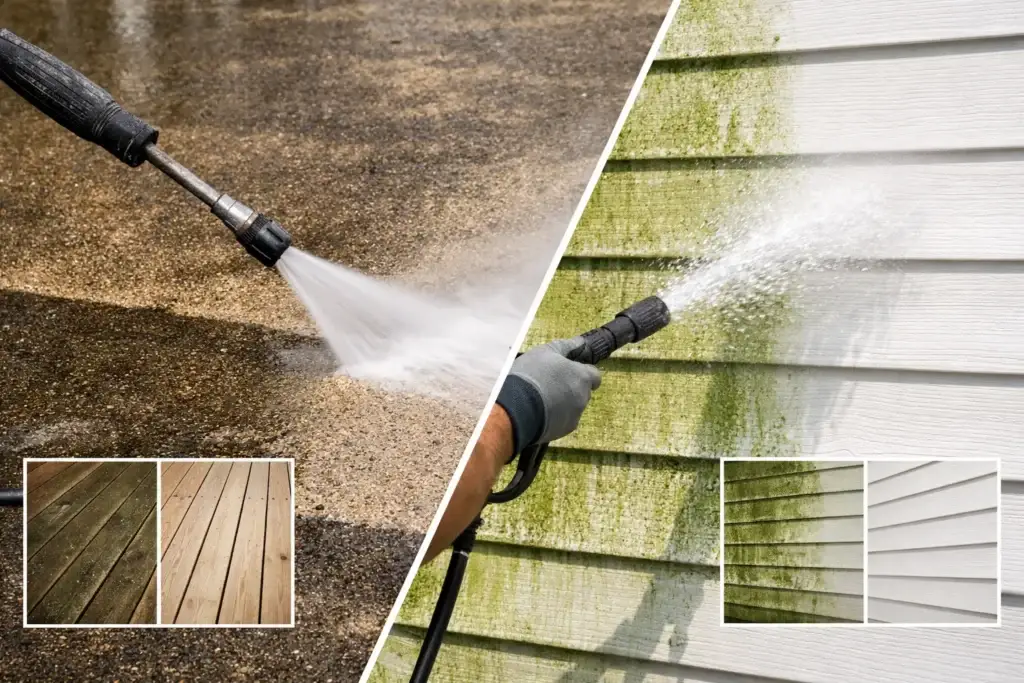
Pressure washing cleans with the force of water. A professional machine sends water through a specialized nozzle at high pressure to break apart and rinse away embedded dirt, mud, salt residue, peeling paint, tire marks, and other tough surface grime. It is especially effective on hard, durable materials that can handle that force.
Soft washing takes a different approach. Instead of relying on pressure to blast stains away, it uses a carefully prepared cleaning solution at low pressure. The solution treats organic growth such as algae, mold, mildew, moss, and lichen, then the surface is rinsed gently. Think of it as treating the cause of the stain rather than only scrubbing its visible layer.
Both methods use water, professional equipment, and trained application. The difference is how the cleaning power is delivered. Pressure washing relies mainly on force. Soft washing relies mainly on the right solution, dwell time, and a controlled low-pressure rinse.
When Pressure Washing Is the Better Choice
Concrete, brick, pavers, and many hardscape surfaces usually benefit from pressure washing. Driveways and walkways collect vehicle fluids, mud, winter sand, leaf stains, and algae that can become slippery. A properly adjusted pressure washing system can lift that buildup efficiently and restore a cleaner, more uniform appearance.
Pressure washing is also often a good fit for durable patios, pool decks, retaining walls, commercial sidewalks, and certain exterior masonry. The key word is properly. Surface condition, age, joint material, and previous repairs all affect the correct pressure level and nozzle selection.
A professional does not simply turn a machine to its highest setting. Too much pressure can etch concrete, strip mortar from brick joints, dislodge paver sand, or leave visible wand marks. The goal is a clean surface with no damage, not just a dramatic before-and-after photo.
When Soft Washing Is the Safer Choice
Soft washing is the preferred method for most house exteriors and roofs because these materials are not designed to withstand aggressive water pressure. Vinyl siding, painted wood, stucco, Hardie board, cedar, and composite surfaces can all be damaged when cleaned too forcefully.
It is particularly effective when the problem is organic growth. Those green patches on siding are often algae. Dark roof streaks are commonly caused by algae growth as well. If a cleaner only uses force, some staining may disappear temporarily while the underlying growth remains in protected seams, textured surfaces, and shaded areas.
Soft washing reaches those areas with a cleaning solution designed to break down the buildup. It is then rinsed at low pressure, helping protect siding panels, window seals, soffits, landscaping, and paint. For homes near the coast in places like Mystic, Stonington, and Westerly, this controlled approach can also help address the mix of moisture, salt air, pollen, and mildew that builds up over time.
Why Roofs Need Low Pressure
A roof should not be pressure washed. High pressure can remove protective granules from asphalt shingles, force water beneath roofing materials, and shorten the roof’s service life. It can also damage flashing, ridge caps, and delicate areas around vents.
Professional roof soft washing uses a low-pressure application designed for the roofing material and the visible growth. The solution does the work, allowing stains and organisms to release without the mechanical damage associated with blasting water across shingles. Roof cleaning should always be handled carefully, with attention to runoff control, plant protection, and safe access.
The Surface Matters More Than the Stain
Two surfaces can look equally dirty but require completely different cleaning methods. A green concrete walkway and green vinyl siding may both have algae, but concrete can generally tolerate more pressure while vinyl should be treated gently.
The same is true for decks. An older wood deck with raised grain, loose boards, or aging stain can be ruined by excessive pressure. Soft washing may be used to treat biological buildup, while a carefully controlled wash can help prepare certain wood surfaces for refinishing. The right approach depends on the wood species, condition, coatings, and the homeowner’s plans for the deck afterward.
Painted surfaces deserve the same caution. If exterior paint is failing, cleaning can reveal loose or peeling areas that were already ready to come off. That is not necessarily damage caused by cleaning, but it does mean the service should be planned with the surface condition in mind. For homeowners preparing to paint, a professional assessment helps avoid surprises.
What Happens When the Wrong Method Is Used?
The wrong cleaning method can cost far more than a cleaning appointment. High pressure on siding can crack panels, force water behind the exterior, damage caulking, and strip paint. On a roof, it can reduce shingle protection and create risks that are not obvious from the ground.
Soft washing is not a shortcut, either. It requires the proper solution strength, measured application, adequate dwell time, and thorough rinsing where appropriate. Applying too much product, failing to protect sensitive plants, or using an unsuitable mixture can create its own problems. This is why professional training, commercial equipment, and a deliberate process matter.
A reliable exterior cleaner will inspect the property before work begins, identify vulnerable areas, protect nearby plants and fixtures, and adjust the method as needed. The best result is not simply a brighter surface. It is a cleaner property that stays protected.
How to Choose the Right Cleaning Method
Start with the surface, then consider the problem. Hard concrete with tire marks and embedded grime may call for pressure washing. Siding with algae, a stained roof, or a painted fence generally calls for soft washing. If the material is delicate, aged, coated, or already showing wear, caution should lead the decision.
A few signs that professional guidance is worth it include persistent roof streaking, mildew that returns quickly, second-story siding, steep roofs, slippery walkways, and stains that have not responded to ordinary cleaning. These jobs involve more than appearance. They can involve fall risks, hidden surface damage, and cleaning products that need to be handled correctly.
For commercial properties, the decision also comes down to scheduling and presentation. Entryways, sidewalks, dumpster areas, and exterior walls need to look clean without disrupting customers or damaging the property. A tailored cleaning plan can match the surface, traffic level, and maintenance schedule.
Better Results Come From the Right Process
Pressure washing and soft washing are not competing services. They are tools for different jobs, and many properties need both. A home might need soft washing for the roof and siding, pressure washing for the concrete driveway, and a gentle approach for the deck and windows.
That is why a fast quote should begin with a clear look at what needs cleaning, not a one-size-fits-all promise. Licensed and insured professionals can match the method to the material, use industrial equipment responsibly, and help protect the curb appeal you have worked hard to maintain.
If your exterior is showing green growth, dark streaks, slippery buildup, or stubborn stains, choose a cleaning method that protects the surface as well as its appearance. The right wash can make your property look cared for again without creating the next repair project.