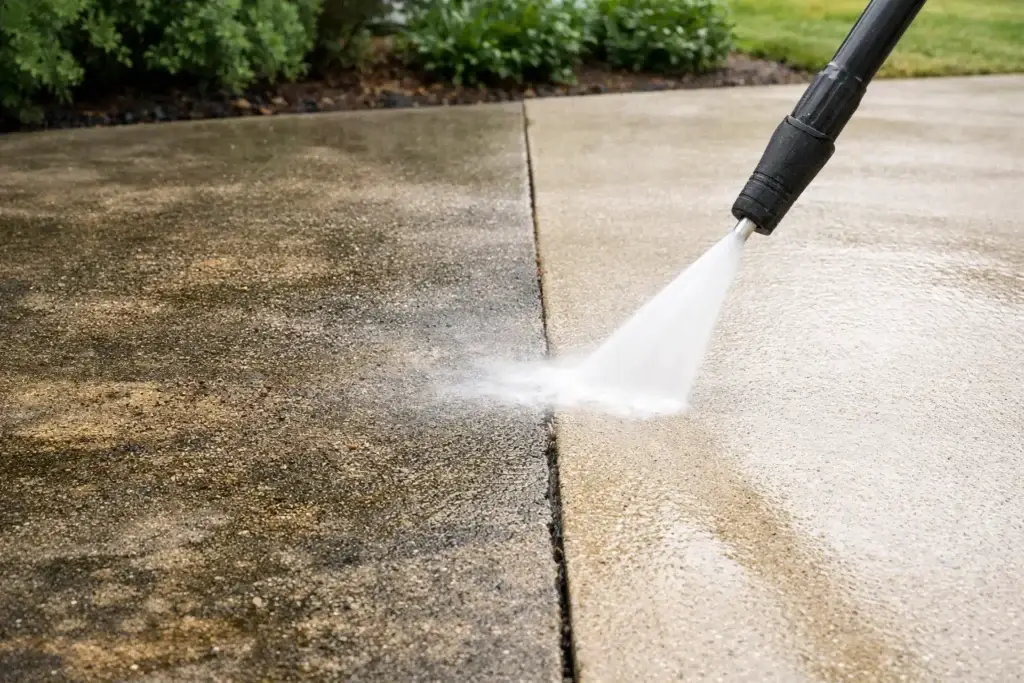
A Connecticut driveway can look permanently stained after a winter of road salt, tire marks, algae, and muddy runoff. A pressure washer can make a dramatic difference in one afternoon, but homeowners are right to ask: can pressure washing damage concrete? Yes – when the surface is already vulnerable or the equipment is used incorrectly.
The good news is that properly cleaned concrete should look brighter, more even, and safer to walk on without being scarred in the process. The difference comes down to surface condition, water pressure, nozzle selection, cleaning solution, and the person operating the equipment.
Can Pressure Washing Damage Concrete?
Concrete is durable, but it is not indestructible. High-pressure water can remove grime, mildew, and surface stains. It can also remove weak material from the top layer of concrete when too much force is concentrated in one spot.
The most common form of damage is etching. This leaves visible lines, swirls, or rough patches that look lighter than the surrounding concrete. Etching often happens when someone holds a narrow spray tip too close to the surface or moves the wand slowly and unevenly. Once those marks are cut into the concrete, cleaning alone will not erase them.
Pressure washing can also expose loose aggregate in older or deteriorating slabs. If concrete is already flaking, spalling, cracking, or scaling from freeze-thaw cycles and de-icing salts, aggressive cleaning may pull away more of the weakened surface. The washer did not create the underlying issue, but it can make an existing problem more noticeable.
Pressure is only one part of the equation
Many people focus only on PSI, but pressure alone does not determine whether a job is safe. A high-powered machine with the right fan tip, proper distance, and steady movement can be safer than a smaller machine used with a pinpoint nozzle held inches from the ground.
Water flow, nozzle angle, dwell time, and cleaning chemistry matter too. For example, organic buildup such as algae and mildew often responds better to an appropriate cleaning treatment than to repeated passes with excessive pressure. Letting the solution do its job reduces the need to force contaminants off the surface.
Concrete Condition Changes the Cleaning Plan
Before any cleaning begins, the concrete should be inspected. A newer, well-cured driveway in good condition can generally handle professional cleaning well. A neglected patio with surface deterioration requires more care.
Fresh concrete needs time to cure fully before it is pressure washed. Cleaning it too soon can weaken the surface and interfere with the curing process. When in doubt, ask the installer or a cleaning professional before scheduling service.
Older concrete deserves a closer look. Watch for crumbling edges, loose material, pitting, widespread hairline cracks, and white powdery residue. These conditions may point to moisture movement, salt damage, poor drainage, or prior wear. Cleaning can improve appearance, but it is not a repair for failing concrete.
Stamped, colored, and decorative concrete also need a more controlled approach. Their finish can be damaged by harsh pressure or incorrect chemicals, and an uneven result is more obvious than it is on a standard gray driveway. Sealed concrete may need gentle cleaning to preserve the coating, followed by resealing when the surface calls for it.
How Professionals Clean Concrete Without Etching It
A safe concrete cleaning service is not simply about turning a machine on at full power. It begins with matching the method to the slab, the stain, and the surrounding property.
First, the surface is cleared of loose debris and inspected for vulnerable areas. Stubborn oil, mildew, algae, rust, or leaf tannin stains may receive targeted pretreatment. This step helps break down the stain before rinsing, rather than relying on high pressure as the only solution.
Next, a professional typically uses a broad, controlled spray pattern or a commercial surface cleaner for large flat areas. A surface cleaner keeps the spray at a consistent height and moves in overlapping passes, which helps prevent the tiger-striping and wand marks common with inexperienced DIY work.
The technician also keeps an appropriate distance from the concrete and adjusts the cleaning method around edges, cracks, joints, and damaged areas. The goal is an even clean, not the most aggressive clean possible. Afterward, the area is thoroughly rinsed so cleaning residue and loosened debris do not dry back onto the surface.
At CT Softwash LLC, our approach is centered on getting visible results while protecting the material underneath. That means using professional-grade equipment with trained judgment, not treating every driveway, walkway, and patio as if it needs maximum pressure.
Common DIY Mistakes That Mark Concrete
Renting a pressure washer can be useful for the right project, but concrete mistakes happen quickly and are difficult to reverse. The biggest issue is using a zero-degree or narrow-tip nozzle on flatwork. That concentrated stream can cut lines into concrete almost immediately.
Another common mistake is cleaning in random, uneven strokes. When a wand is paused or overlaps inconsistently, the result may be dark and light stripes across the driveway. Homeowners sometimes make this worse by going back over the marks with more pressure.
Skipping pretreatment is another problem. Oil spots and organic stains may need a product designed for that type of buildup. Blasting at them repeatedly can roughen the concrete while still leaving a shadow of the stain behind.
Finally, avoid pressure washing when temperatures are near freezing or when runoff could refreeze. In Connecticut, this is especially relevant in late fall and early spring. Water entering cracks and joints can freeze later, expand, and contribute to further surface damage.
When to Avoid Pressure Washing Concrete
Sometimes the safest recommendation is to postpone cleaning or use a gentler method. If a slab is actively crumbling, has deep spalling, or shows broad areas of delamination, it may need evaluation and repair before any intensive washing.
Pressure washing is also not the right first step for every stain. Rust, fertilizer marks, battery acid damage, paint, and deeply absorbed oil can require specialized stain treatment. A professional can assess whether cleaning will improve the appearance or whether the damage is permanent and needs a different solution.
If you are unsure whether your concrete is sealed, decorative, newly installed, or structurally compromised, do not test a high-pressure stream in the most visible part of the driveway. Start with a small inconspicuous area or schedule an assessment.
A Cleaner Driveway Should Not Come With a Repair Bill
Pressure washing is an effective way to remove slippery algae, winter grime, and surface buildup from concrete. But the right result is not just a cleaner slab. It is a consistently cleaned surface with no etched lines, gouged areas, or unnecessary wear.
For homeowners in Groton, Mystic, Waterford, and surrounding Connecticut communities, professional service can take the guesswork out of equipment settings, cleaning solutions, and runoff management. If your driveway or patio is looking dull, stained, or slippery, choose a cleaning method that protects your investment as carefully as it improves curb appeal.