
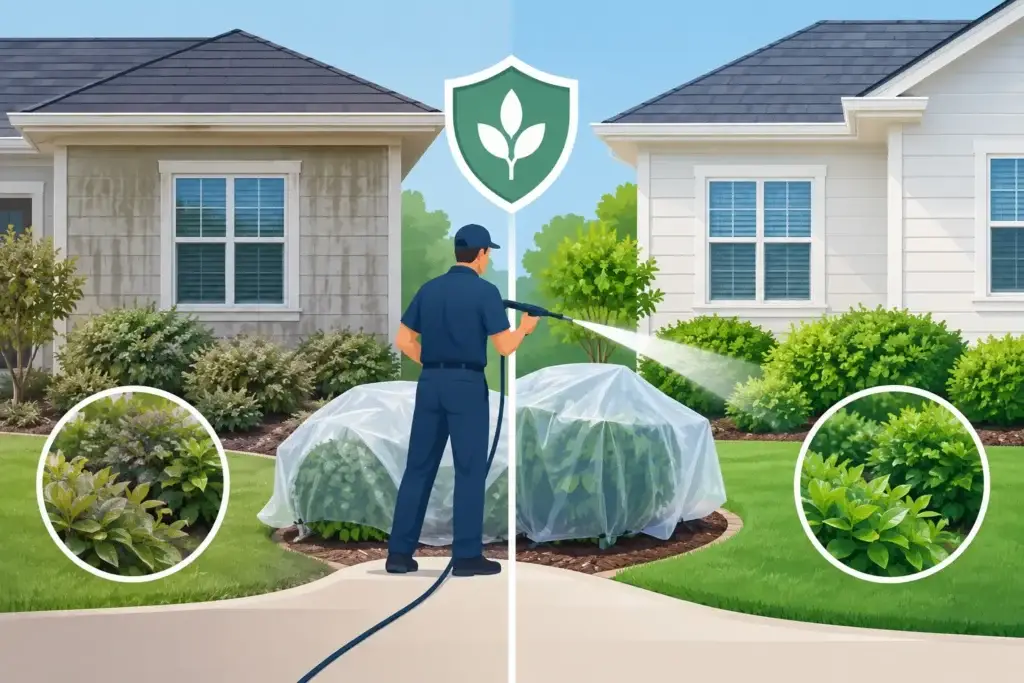
A clean house should not come at the expense of the hydrangeas by the front walk or the shrubs beneath your roofline. To protect landscaping during exterior cleaning, the work has to be planned around your plants from the start, not treated as an afterthought once cleaning begins. The right preparation, application method, and rinsing process allow you to remove mold, algae, pollen, and stains while keeping your lawn, flowers, and foundation plantings safe.
For Connecticut homeowners, that matters especially in spring and summer, when landscaping is actively growing and exterior buildup is often at its worst. Professional soft washing is designed to clean delicate surfaces such as siding and roofing at low pressure. Just as important, a careful technician manages water flow and cleaning solutions around the property.
Why Plants Can Be Affected During Exterior Cleaning
Plants are sensitive to more than direct contact with a cleaning solution. Overspray can settle on leaves, runoff can collect in mulched beds, and a concentrated product can remain on foliage if it is not rinsed promptly. Heat, drought stress, newly planted flowers, and shallow-rooted annuals can all make landscaping more vulnerable.
That does not mean your home cannot be safely washed. It means the service needs the right process. High pressure is not the answer for siding or roofs, and applying more solution than necessary is not better cleaning. Proper exterior cleaning uses the appropriate strength for the surface, controlled application, and thorough rinsing.
Some plants are also naturally more sensitive than others. Tender annuals, ferns, roses, herbs, vegetable gardens, and fresh plantings deserve extra attention. Established boxwoods, hostas, and mature shrubs may tolerate incidental exposure better, but they still need to be protected and rinsed.
Protect Landscaping During Exterior Cleaning With Proper Prep
A dependable crew starts with a walk-around before equipment is turned on. This identifies flower beds, hanging baskets, potted plants, vegetable gardens, downspout outlets, pond areas, and shrubs that touch the home. It also helps locate areas where runoff could gather.
Homeowners can make this step easier by moving lightweight pots, outdoor furniture, and decorations away from the cleaning area when possible. If you have a prized plant, a newly installed landscape bed, or a garden with edible plants, point it out before work begins. Clear communication lets the technician adjust the plan instead of discovering a concern halfway through the job.
Pre-Wet Plants and Soil
One of the most effective protections is also one of the simplest: saturate plants and the surrounding soil with clean water before cleaning starts. Wet leaves are less likely to absorb residue, and damp soil helps dilute any small amount of runoff that reaches the root zone.
Pre-wetting should include the foliage, mulch bed, and soil around foundation plantings. It is not a quick mist. The goal is to give plants a protective layer of clean water without flooding the bed or creating muddy conditions. During larger house washes or roof cleanings, the landscaping should be checked and re-wet as work moves around the property.
Cover Only When It Helps
Covering plants with breathable material can be useful for highly sensitive flowers or small garden beds near the work area. However, plastic tarps are not automatically safer. On a warm, sunny day, sealed plastic can trap heat and stress plants quickly. It can also hold cleaning residue against leaves if the cover is not managed correctly.
When temporary covering is needed, it should be used for a limited time and removed promptly. In many cases, steady watering, careful application, and active rinsing provide better protection than covering every plant around the house.
Use the Right Cleaning Method for Each Surface
Exterior cleaning is not one-size-fits-all. A concrete driveway can handle a very different approach than painted siding, cedar decking, asphalt shingles, or window trim. Matching the method to the material protects the surface and makes it easier to control the work around landscaping.
Soft washing is generally the preferred method for algae-stained siding and roof streaks because it relies on low pressure and a surface-appropriate cleaning solution. The solution does the cleaning work rather than a forceful stream of water. That reduces the chance of blasting mulch into the lawn, stripping paint, or sending overspray across a flower bed.
Pressure washing still has a place for durable hardscapes such as concrete, brick, and certain stone surfaces. Even then, the operator should control the direction of spray, avoid forcing debris into planting beds, and keep a safe distance from landscape edging. The strongest setting is rarely the best setting.
Control Runoff and Overspray
Most landscaping protection happens while the cleaning is underway. A trained technician works in manageable sections, watches wind direction, and avoids applying product when gusts could carry it beyond the target surface. If windy conditions are too strong, rescheduling part of the job may be smarter than taking an unnecessary risk.
Downspouts deserve close attention during roof cleaning. Water and residue leaving the roof often travel through the gutter system and discharge in a concentrated area at the bottom of a downspout. That outlet may be beside a shrub, a hosta bed, or a small patch of lawn. The area should be heavily watered before, during, and after cleaning so runoff is diluted rather than allowed to sit.
The same principle applies around patios, retaining walls, and driveways. Cleaning water naturally moves downhill, so technicians should anticipate where it will go. Protecting plants is not just about what lands on their leaves. It is about managing the entire path of water across the property.
Rinse Plants Throughout the Job, Not Just at the End
A final rinse is essential, but it should not be the only rinse. Plants near active cleaning areas need regular attention throughout the service, particularly during house washing and roof cleaning. This keeps leaves wet, clears any incidental contact quickly, and prevents residue from drying on foliage.
After each section is complete, nearby landscaping should receive a generous clean-water rinse. Technicians should rinse from the top of the plant down, including the underside of leaves where residue can collect. Soil should also be watered well enough to flush and dilute runoff through the root area.
This is one reason professional service can be a better value than a DIY approach. A homeowner focused on reaching a second-story gable or removing stubborn roof stains may not be able to monitor plants at the same time. A prepared crew has the equipment, manpower, and process to manage both tasks safely.
What to Do if You Notice Plant Stress
Even with careful work, plants can occasionally show temporary stress after exterior cleaning. Watch for browning leaf edges, spotting, wilting, or unusual discoloration over the next day or two. Do not assume every change is related to the cleaning. Heat, insects, disease, and watering issues can create similar symptoms.
If a plant was exposed or you are concerned about a specific area, rinse it thoroughly with clean water as soon as possible and continue watering the soil normally over the next several days. Avoid adding fertilizer immediately, since stressed plants do not need another variable. Take photos and contact the cleaning company promptly so the concern can be evaluated.
Questions to Ask Before Hiring an Exterior Cleaning Company
Before scheduling, ask how the company protects plants, handles downspout runoff, and rinses landscaping during the process. You should also ask whether the crew uses soft washing for delicate exterior surfaces and whether they are licensed and insured. Clear answers are a good sign that plant protection is part of the standard workflow, not a last-minute promise.
CT Softwash LLC approaches each property with surface safety and landscape protection in mind. The goal is simple: remove the buildup that hurts curb appeal without creating a new problem in the yard. A professional cleaning should leave your siding, roof, walkways, and outdoor spaces looking refreshed, while the plants that make your home feel cared for stay healthy in place.
Before your next exterior cleaning, take a quick walk around your home and make note of the landscaping you value most. A few minutes of preparation and a crew that respects the details can make the difference between a clean property and a truly well-protected one.