
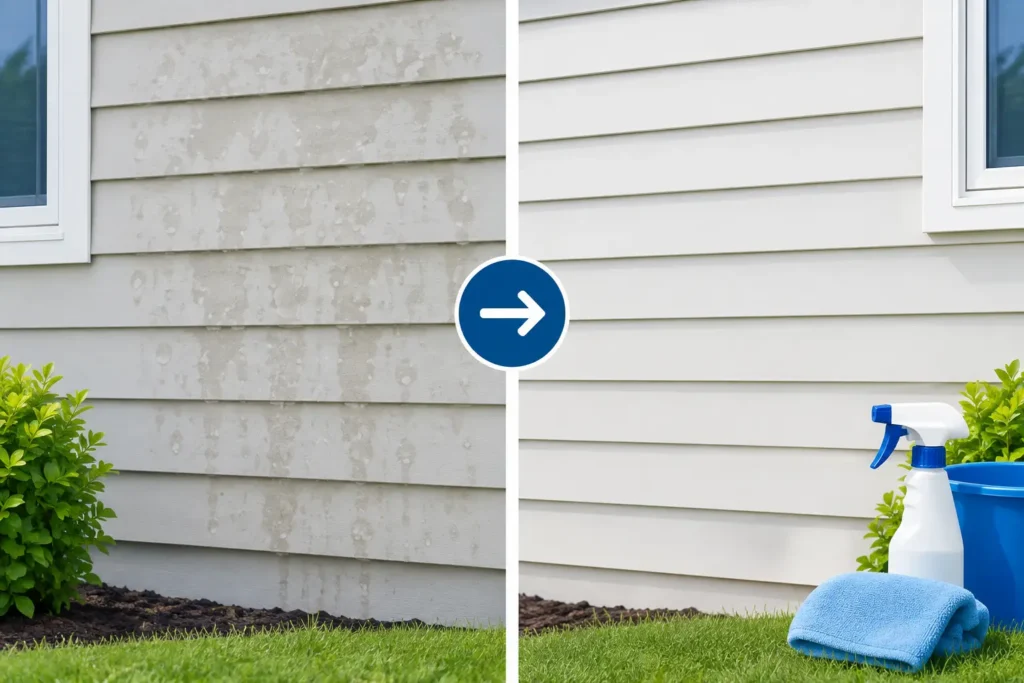
Those orange, white, or chalky marks along the bottom of your siding are not ordinary dirt. Sprinkler overspray can leave behind hard-water minerals, iron deposits, and residue that bond to exterior surfaces over time. To remove sprinkler stains safely, you need to match the cleaning method to the material instead of reaching for high pressure or the strongest chemical in the garage.
For Connecticut homeowners, sprinkler staining is especially common on light-colored vinyl, painted trim, concrete walks, fences, and windows. The good news is that most stains can be improved without replacing materials or risking damage. The key is to act early, test every cleaner, and know when a stain has moved beyond a simple DIY wash.
What Causes Sprinkler Stains?
Sprinkler stains form when water dries repeatedly on the same surface. If the water contains dissolved minerals such as calcium and magnesium, it leaves a pale white, gray, or chalky crust. Water with iron can create orange, rust-colored streaks that are especially noticeable on siding, masonry, and vinyl fencing.
A stain’s color offers a useful clue. White residue is usually hard-water scale. Orange or reddish-brown spotting often points to iron in well water. Green or black discoloration may be algae, mildew, or organic buildup mixed with mineral deposits. These problems can overlap, which is why one all-purpose cleaner does not always solve the issue.
The longer sprinklers hit the same area, the harder deposits become. Sun and heat also bake residue into the surface. That is why a light stain near a flower bed can become a stubborn curb-appeal problem after one season.
How to Remove Sprinkler Stains Safely on Common Surfaces
Start with the least aggressive option that makes sense for the stain. Rinse the area first with a garden hose to remove loose dust and soil. Clean in a shaded area or on a cool day whenever possible. Cleaner dries too quickly on hot surfaces, which can cause streaking or leave residue behind.
Before applying any product, test a small, hidden section. This simple step protects paint, oxidized vinyl, sealers, and delicate finishes from unexpected discoloration.
Vinyl Siding and Painted Siding
For light mineral spotting, begin with a mild exterior-safe cleaner and a soft-bristle brush or microfiber cloth. Work from the bottom up in manageable sections, then rinse thoroughly from the top down. Bottom-up application helps prevent dirty runoff from leaving streaks on clean siding.
If hard-water deposits remain, use a product specifically labeled for mineral or sprinkler stain removal and approved for the surface you are cleaning. Follow the label dilution and dwell-time instructions exactly. Do not let acidic cleaners dry on siding, window frames, painted trim, or landscaping.
Avoid using a pressure washer at close range on siding. High pressure can force water behind panels, strip paint, dent soft vinyl, or drive cleaning solution into areas where it does not belong. Soft washing uses controlled application, proper chemistry, and a gentle rinse to clean the surface without that risk.
Windows and Glass Doors
Sprinkler deposits on glass can look like permanent cloudy spots, especially when they have been present for months. Rinse the glass first, then use a glass-safe mineral deposit cleaner with a nonabrasive applicator. Work carefully around window seals, frames, and nearby painted surfaces.
Never use steel wool, razor blades, rough scouring pads, or abrasive powders on residential windows unless the glass manufacturer specifically permits it. These tools can scratch glass, damage coatings, and turn a removable stain into a lasting repair issue.
Some cloudy glass is no longer surface residue. Mineral deposits can etch glass after prolonged exposure, particularly in direct sun. If a safe cleaner does not improve the mark after a careful test, stop scrubbing. Professional assessment may be the better choice than making the damage more visible.
Concrete, Pavers, and Brick
Concrete and masonry are durable, but they are also porous. Mineral and iron stains can settle into tiny surface openings, which makes them harder to remove than deposits on vinyl. Start with a cleaner designed for masonry or concrete and apply only as directed.
Do not assume more pressure is better. A powerful pressure washer can leave wand marks, expose aggregate, weaken mortar, or create uneven-looking clean spots. It may remove surface grime while leaving the mineral stain behind. On older brick, soft stone, or loose mortar, the wrong method can cause more harm than the stain itself.
For pavers, be especially careful with joint sand and sealers. Aggressive washing can wash out sand between pavers or dull the finish of a sealed surface. A professional cleaning approach can target the staining while preserving the surface’s appearance and stability.
Fences, Decks, and Outdoor Fixtures
Vinyl fences often respond well to a gentle mineral-removal process, while painted wood requires more caution. Acidic products can damage paint, alter wood color, or affect nearby metal hardware. Use a cleaner appropriate for the specific material, apply it lightly, and rinse before it dries.
On composite decking, check the manufacturer’s cleaning guidance before treating mineral spots. Some products that are acceptable on concrete are too harsh for composite boards. For painted metal fixtures, use a mild cleaner first and avoid abrasive pads that can scratch the protective coating.
Cleaners and Methods to Avoid
A stain that looks tough can tempt homeowners to use whatever is strongest. That approach often creates a second, more expensive problem. Avoid mixing cleaning products under any circumstances. Combining chemicals can produce harmful fumes or dangerous reactions.
Be cautious with these common shortcuts:
- Undiluted acids or rust removers on siding, painted surfaces, natural stone, or glass
- Bleach used as a mineral-stain remover, since it may lighten organic growth but does not dissolve hard-water scale
- Wire brushes, steel wool, and abrasive pads that scratch glass, vinyl, paint, and finished metal
- High-pressure washing close to siding, windows, roof edges, electrical fixtures, and older masonry
- Household vinegar on natural stone, including marble, limestone, travertine, and some decorative masonry, because acid can etch the surface
Vinegar may help with very light hard-water residue on certain nonporous surfaces, but it is not a universal exterior cleaner. Its acidity can damage the wrong material, affect nearby plants, and leave a strong odor. A surface-specific product used carefully is the safer option for substantial staining.
Protect Plants, Pets, and Your Property
Cleaning around landscaped beds takes planning. Before applying any solution, water nearby plants and cover sensitive vegetation if needed. Keep pets and children away from the work area until all surfaces have been thoroughly rinsed and are dry.
Control runoff, especially near ponds, drains, and gardens. Use only the amount of cleaner needed, and rinse surrounding areas after the job. Wear gloves and eye protection, even when using a product marketed as gentle. Exterior cleaning solutions can irritate skin and eyes, and splashback is common when working on siding or fences.
Ladders add another layer of risk. Do not overreach to clean high siding or second-story windows. A fall is never a fair trade for a cleaner exterior. Professional technicians have the equipment and process to treat elevated areas from the ground whenever possible.
Prevent Sprinkler Stains From Coming Back
The most effective stain removal plan includes correcting the overspray. Adjust sprinkler heads so water lands on the lawn and planting beds, not your siding, windows, driveway, or fence. Check the system after mowing, landscaping work, or freeze-thaw cycles, since sprinkler heads can shift over time.
If you have iron-rich well water, consider discussing filtration or treatment options with a qualified water professional. Cleaning the exterior will improve the appearance, but untreated water can continue depositing iron with every irrigation cycle.
A quick rinse of affected surfaces once in a while can also prevent minerals from building into a harder crust. This is particularly useful during dry, hot stretches when sprinkler systems run frequently. For homes near the shoreline or in areas with heavy pollen, regular exterior maintenance also keeps mineral deposits from mixing with salt, dust, and organic buildup.
When It Makes Sense to Call a Professional
Call for professional help when stains cover large areas, return quickly, affect delicate materials, or sit on second-story siding and windows. It is also smart to bring in an experienced exterior cleaning team if you are dealing with oxidized vinyl, historic masonry, roof-adjacent staining, painted wood, or etched glass.
CT Softwash LLC uses surface-appropriate soft washing and exterior cleaning methods to restore curb appeal without relying on damaging pressure. Licensed and insured professionals can identify whether you are seeing iron, hard-water scale, algae, oxidation, or a combination of issues, then use a safer treatment plan for the surface in front of them.
A clean exterior should not come with peeled paint, damaged landscaping, or water forced behind your siding. Address sprinkler overspray early, use products made for the material, and let a qualified professional handle stubborn stains before they become a larger repair project.