
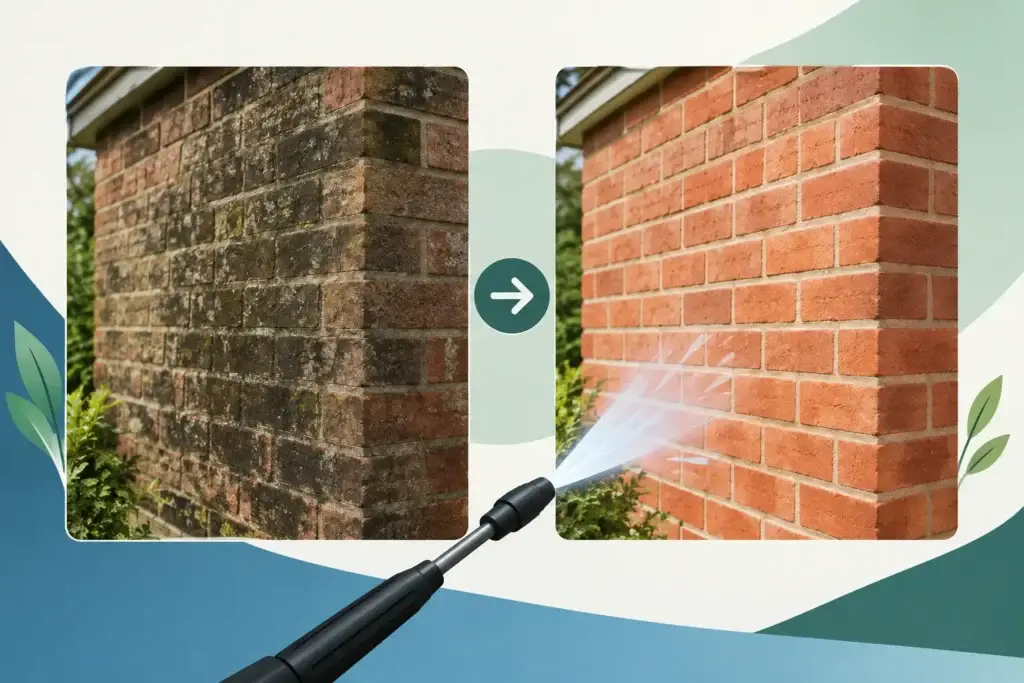
Brick walkways, stone patios, retaining walls, and masonry chimneys are built to last, but Connecticut weather can make them look neglected long before their time. Moisture, shade, pollen, salt, and organic growth leave surfaces dark, blotchy, and slippery. Professional masonry cleaning removes that buildup while respecting the brick, stone, and mortar that hold your exterior together.
The goal is not to blast a surface until it looks different. It is to use the right cleaning method, pressure, and solution for the material so your property looks refreshed without creating avoidable damage.
Why Masonry Gets Dirty So Quickly
Masonry is durable, but it is not maintenance-free. Brick and natural stone are porous to varying degrees, which means they can hold moisture, dirt, and microscopic organic growth. Mortar joints are often more vulnerable than the masonry units themselves, especially on older homes and walls.
In New England, damp springs, humid summers, falling leaves, and winter runoff create ideal conditions for algae, mildew, moss, and surface staining. A north-facing wall or shaded patio may stay wet longer than the rest of the property, so it often develops green or black growth first. Near driveways and roads, masonry may also collect vehicle residue, salt, and general grime.
Some discoloration is simply cosmetic. Other staining can point to a moisture issue, poor drainage, or vegetation that is keeping a wall damp. Cleaning gives you a clearer view of the surface and makes it easier to spot areas that need repair before they become larger maintenance problems.
Masonry Cleaning Is Not Just High Pressure
A common mistake is treating brick or stone like a concrete driveway. High pressure can be useful on the right hardscape at the right setting, but it is not automatically the safest answer for every masonry surface.
Too much pressure can chip soft brick, etch natural stone, dislodge loose mortar, force water into cracks, and leave visible lines across the surface. On older masonry, aggressive cleaning can remove the weathered outer face of the brick, making it more prone to moisture absorption later. It may look cleaner for a day, then create a more expensive issue down the road.
That is why a professional approach starts with evaluating the material. Dense manufactured pavers, fieldstone, cultured stone, historic brick, and a masonry retaining wall do not all respond the same way. The cleaning plan should account for the surface condition, the type of stain, nearby landscaping, drainage, and whether the mortar is already deteriorating.
For many surfaces, low-pressure application of a masonry-safe cleaning solution followed by a controlled rinse is the best method. The solution does the real work of breaking down algae, mildew, and organic buildup. Pressure is then used carefully to rinse away residue rather than to strip the surface clean.
What Can Professional Masonry Cleaning Remove?
Results depend on the material and the source of the stain, but a proper cleaning can make a major difference in curb appeal and safety. Common targets include green algae, black mildew staining, moss, dirt, pollen, leaf tannins, surface grime, and light rust or irrigation stains.
A patio that has become dark and slick can look brighter and feel safer underfoot after treatment. A brick front entry can regain its original color variation instead of appearing uniformly gray or green. Retaining walls, steps, and pool surrounds often benefit as much from cleaning as the house itself because these features are close to where people walk and gather.
There are limits. Deep rust, oil saturation, permanent mineral deposits, paint, and efflorescence may require specialized treatment, and some stains cannot be fully removed without affecting the surrounding surface. Efflorescence is the white, chalky residue caused when moisture carries salts to the masonry surface. Cleaning can improve its appearance, but recurring efflorescence usually means the underlying moisture source needs attention.
A trustworthy contractor should set realistic expectations before work begins. “Like new” is not always possible on weathered masonry, but a careful cleaning can still produce a dramatic improvement without taking unnecessary risks.
When Your Brick, Stone, or Pavers Need Attention
You do not need to wait until masonry looks completely black or green. Early cleaning is usually easier, safer, and more affordable than letting organic growth become established for years.
Watch for slippery steps or walkways, green growth in shaded areas, dark streaks on brick, moss between pavers, stains near downspouts, or mortar that looks persistently damp. These conditions do not always mean there is structural damage, but they are worth addressing.
For most properties, masonry cleaning every one to three years is a reasonable starting point. The right interval depends on shade, tree coverage, drainage, nearby water, and how much foot traffic the area receives. A sunny front walk may stay clean for years, while a shaded stone patio in a wooded yard may need more frequent care.
The Right Process Protects Your Property
Professional masonry cleaning should feel straightforward for the customer, but the preparation behind it matters. Before cleaning begins, the technician should inspect the surface for loose mortar, cracks, spalling brick, flaking stone, drainage concerns, and delicate adjacent materials.
Nearby plants, painted surfaces, windows, metal fixtures, and landscaping should be protected as needed. A responsible crew also controls runoff and uses appropriate dilution and rinsing practices. This matters around gardens, entryways, patios, and commercial properties where people may be walking nearby.
The surface is then treated based on what is growing or staining it. Organic buildup often responds best to a soft-wash style treatment that reaches into pores and joints. Heavier grime may call for a measured combination of treatment, agitation, and controlled pressure. The work should be adjusted as the surface responds, not handled with a one-setting approach.
After rinsing, the masonry should be allowed to dry before judging final results. Wet stone and brick can appear darker than they will once dry, and some remaining stains may be easier to identify after the cleaning is complete.
Should You Clean Masonry Yourself?
Homeowners can handle light maintenance, such as sweeping leaves off a patio, removing moss from joints by hand, and improving drainage around a wall. Regularly clearing debris makes a real difference because it reduces the moisture that feeds algae and moss.
For larger cleaning jobs, caution is warranted. Rental pressure washers can be powerful enough to damage mortar, carve marks into softer stone, and send debris toward windows or landscaping. Store-bought cleaners can also discolor masonry, harm plants, or react poorly with certain natural stones if used incorrectly.
DIY may make sense for a small, durable paver area with light surface dirt and a clear understanding of the material. It is less suitable for aged brick, loose mortar, vertical walls, chimneys, natural stone, extensive organic growth, or surfaces near delicate landscaping. In those cases, hiring insured professionals is often the lower-risk choice.
Keep Masonry Cleaner Between Services
The simplest preventive step is moisture control. Keep gutters clear, direct downspouts away from walls and walkways, trim back plants that trap moisture, and avoid piling mulch or soil against brick. Sweep leaves and pine needles from patios and steps before they break down into staining organic matter.
If pavers are shifting, joints are opening, or water repeatedly pools in one area, solve those issues instead of repeatedly cleaning around them. A clean surface will stay cleaner longer when water has somewhere to go.
For homeowners and commercial property owners, a scheduled exterior maintenance plan can also prevent multiple surfaces from reaching the point where they need intensive restoration. Coordinating masonry cleaning with house washing, gutter cleaning, and walkway care is often more convenient than tackling each issue after it becomes highly visible.
A Cleaner Surface Starts With the Right Method
Your brick, stone, and pavers are part of your property’s first impression, but they also serve practical purposes every day. They deserve a cleaning method that improves appearance without sacrificing the integrity of the material.
CT Softwash LLC provides careful exterior cleaning for property owners who want visible results without the guesswork. If your masonry is stained, slick, or overdue for attention, a professional assessment can help determine the safest path forward. A clean, dry, well-maintained surface is easier to enjoy and easier to protect for the years ahead.