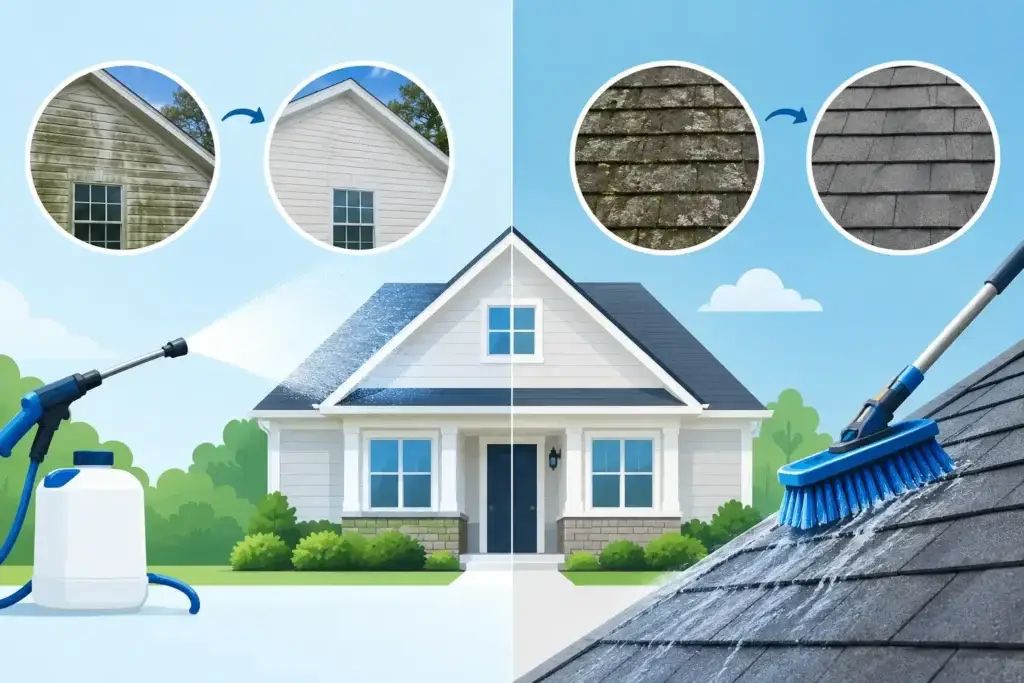
A roof can look cleaner after a hard brushing and still have the same algae problem underneath. That is the key issue in soft washing versus brushing: one method treats the organic growth causing discoloration, while the other mainly removes what is visible on the surface. Choosing the wrong approach can mean wasted effort, premature wear, and stains that return much sooner than expected.
For Connecticut homeowners, the right cleaning method depends on the surface, the type of buildup, and its condition. Coastal moisture, tree cover, pollen, and seasonal weather give algae, moss, mildew, and lichen plenty of opportunities to grow. A professional should choose the cleaning method that restores the property without trading a short-term improvement for long-term damage.
What Soft Washing Actually Does
Soft washing is a low-pressure cleaning process that uses a carefully mixed cleaning solution to break down and remove organic growth. It is not simply pressure washing at a lower setting. The solution does the primary cleaning work, while a gentle rinse carries away the treated buildup.
This makes soft washing especially effective for algae streaks on asphalt roofs, green mildew on vinyl siding, mold on painted trim, and other surfaces that can be damaged by force. Rather than aggressively scraping at the growth, the process reaches the source and neutralizes it. The visible result is a cleaner exterior, but the practical benefit is that treated growth is less likely to reappear immediately.
The word soft matters. Proper soft washing uses controlled water pressure that is safe for the material being cleaned. A roof, for example, should never be treated like a concrete driveway. The goal is to preserve shingles, siding, paint, seals, and landscaping while delivering a clear improvement in appearance.
Soft Washing Versus Brushing: The Main Difference
Brushing relies on friction. A brush, broom, or stiff pad loosens surface dirt and growth through physical contact. It can make sense for a small, sturdy area where a cleaner needs help lifting embedded soil, such as a textured masonry spot or a heavily soiled deck board after an appropriate cleaning treatment.
Soft washing relies on chemistry and low pressure. It is generally the better option when the problem is biological growth spread across a broad or delicate surface. Algae, mildew, moss, and lichen are not just loose dirt. They attach to and grow into tiny pores and crevices. Brushing may remove part of what you see, but it often does not fully treat what remains.
There is also a practical difference in the finish. Brushing can leave inconsistent results if pressure is applied unevenly, especially on siding or painted surfaces. Soft washing delivers more even coverage, which is valuable when cleaning an entire home exterior or roofline.
Why Brushing Can Cause Problems on Roofs and Siding
A brush can feel like the safe, hands-on option because it avoids a pressure washer. In reality, aggressive brushing can create damage that is not obvious until later. Asphalt shingles have protective mineral granules that help them shed water and resist sun exposure. Scrubbing them can dislodge those granules and shorten the roof’s usable life.
Brushing can also snag or lift shingle edges, disturb caulking around vents, and spread loose moss into gutters and downspouts. On older siding, repeated scrubbing may dull the finish, leave scratch marks, or push water behind loose panels. Painted wood is another concern. Once a brush breaks through weak paint, moisture has an easier path into the material underneath.
That does not mean every brush is harmful. A professional may use a soft brush in limited, controlled situations, usually after the proper solution has done most of the work. The difference is technique. Scrubbing should not be the default answer to roof streaks or widespread mildew.
When Soft Washing Is the Better Choice
Soft washing is usually the preferred method for surfaces where organic staining is the main concern and the material cannot tolerate high force. This commonly includes roofs, vinyl siding, painted trim, cedar shake, gutters, fences, and many composite or painted exterior surfaces.
On a roof, black streaks are often caused by algae. Moss and lichen may also be present, particularly on shaded areas. These conditions call for a treatment that addresses growth without stripping shingle granules or driving water where it does not belong. A properly applied soft wash allows the cleaning solution to work before the surface is gently rinsed or allowed to weather clean as appropriate.
For siding, soft washing is a strong choice when green or black staining collects near sprinklers, landscaping, shaded walls, or roof edges. It also handles the film of pollen, dust, and airborne grime that makes a house look tired even when there are no major stains. The result is a more uniform clean without the risk of blasting water under siding seams.
When Brushing Still Has a Place
Brushing is not useless. It is simply a supporting tool, not a universal cleaning method. On a sturdy deck, a controlled brush can help loosen packed-in dirt from wood grain after the right cleaning solution has been applied. On brick or concrete, a brush can help with isolated stains that need more agitation than a rinse alone provides.
It may also be used for small details such as a heavily soiled window sill, a stubborn patch on a retaining wall, or loose debris around exterior fixtures. The key is matching the brush stiffness to the material and avoiding unnecessary force.
If moss is thick on a roof, homeowners are often tempted to scrape or brush it off quickly. That can pull at shingles and create a mess in the gutters. Treatment should come first. Once the growth is neutralized, it can release naturally over time or be handled with a method that protects the roofing system.
Do Not Confuse Soft Washing With High-Pressure Washing
Pressure washing has an important role in exterior maintenance, but it is not the same as soft washing or brushing. Hard surfaces such as concrete driveways, sidewalks, patios, and some masonry can often handle higher pressure when cleaned by an experienced technician. Those surfaces usually need force to lift dirt, tire marks, and ground-in grime.
Roofs, siding, painted surfaces, and delicate wood need a different approach. High pressure can leave marks, remove paint, damage wood fibers, force water behind siding, and weaken roofing materials. The safest cleaning plan begins with identifying the surface instead of using the same equipment setting everywhere.
A professional exterior cleaning crew should inspect the area first, choose the appropriate solution, protect nearby plants and fixtures, and adjust its process based on the condition of the property. That preparation is what separates a clean that lasts from a fast wash that creates another repair project.
What Homeowners Should Consider Before Choosing a Method
Start with the source of the discoloration. If the surface has algae, mildew, moss, or lichen, a soft wash treatment is often the most effective option because it addresses the growth itself. If the issue is loose dirt on durable concrete, brushing or pressure washing may be more appropriate.
Next, consider the age and condition of the material. Older roofs, oxidized siding, peeling paint, weathered decks, and loose mortar all require extra care. A method that is safe for new vinyl siding may not be suitable for aging painted wood. The same is true for cleaning products. Strong solutions must be mixed and applied correctly to protect the surface and surrounding landscaping.
Finally, think beyond the first-day appearance. A heavy brush can deliver an immediate visual change, but if it does not treat the root cause, algae may return quickly. Soft washing typically gives longer-lasting results on biological staining because it removes the conditions that create the stain in the first place.
A Safer Path to a Cleaner Exterior
The best choice is rarely about using the most force. It is about using the right method for the material and problem in front of you. For most roof and siding growth, soft washing is the safer, more complete solution. Brushing may have a limited role on durable surfaces or detail work, but it should not be used aggressively where it can damage protective finishes.
CT Softwash LLC helps property owners throughout southeastern Connecticut choose the right cleaning process for their home or business. Licensed, insured technicians use professional equipment and surface-specific methods to remove buildup while protecting the parts of your property that matter most.
If roof streaks, green siding, or stubborn exterior staining are taking away from your curb appeal, a quick professional assessment can prevent guesswork. Cleaning the surface correctly now is often far easier and more affordable than repairing damage caused by the wrong method later.