
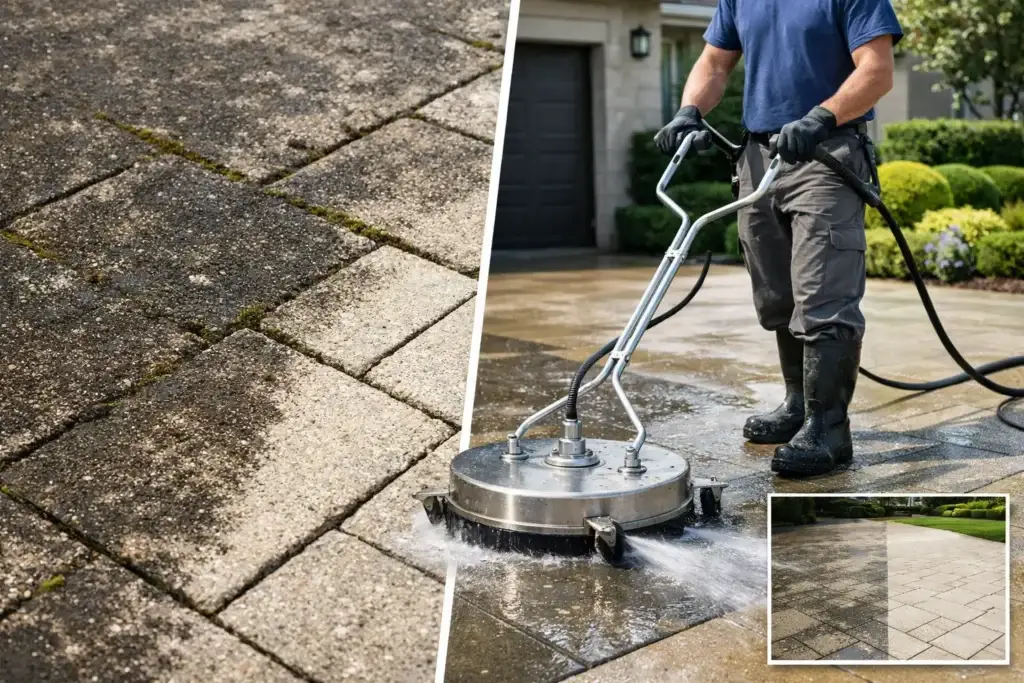
A driveway can look worn out long before it actually is. In Connecticut, winter sand, road salt, leaf stains, algae, and leaking vehicles can leave concrete or asphalt looking permanently dirty. The best driveway cleaning methods remove that buildup without stripping surface material, forcing water into cracks, or making stains worse.
The right approach depends on what your driveway is made of and what is sitting on top of it. A concrete driveway can usually handle more cleaning pressure than asphalt. Fresh oil needs a different treatment than black algae. And a surface that has started to crack or flake needs a more careful plan than a newer slab.
Start With the Surface, Not the Stain
Before bringing out a pressure washer or cleaner, identify the driveway material. Most homes have either poured concrete, asphalt, pavers, or stamped and sealed concrete. Each has a different tolerance for water pressure and chemical cleaners.
Concrete is durable, but it is not indestructible. Excessive pressure held too close to the surface can leave visible wand marks, expose aggregate, or worsen spalling in areas damaged by freeze-thaw cycles. Asphalt is softer and more flexible, so aggressive pressure can loosen gravel, create gouges, and remove protective sealcoat. Pavers require attention to joint sand and drainage, while sealed decorative concrete needs a cleaner that will not haze or strip its finish.
This is why a single “high-pressure fixes everything” approach is rarely the best answer. Effective driveway cleaning starts with a controlled method matched to the surface.
The Best Driveway Cleaning Methods by Problem
General Dirt, Salt, and Winter Grime
For broad, everyday buildup on sound concrete, professional pressure washing with a surface cleaner is usually the most efficient option. A surface cleaner uses spinning jets inside a round housing to clean evenly across the slab. It avoids the striped look that often happens when a pressure-washer wand is moved inconsistently.
The process typically begins with clearing loose debris and pre-wetting nearby landscaping. The driveway is then cleaned in steady passes, with pressure adjusted for the condition of the concrete. A final rinse moves dirty water away from the garage, foundation, and landscaped areas.
For Connecticut properties, this type of cleaning is especially useful after winter. Salt residue, sand, and dirty meltwater can settle into pores and make a driveway look gray or blotchy. Removing it in spring helps restore curb appeal before outdoor entertaining and listing-season photos.
Black Algae, Mildew, and Organic Staining
Dark green or black patches often need more than water pressure. Algae, mildew, and moss can root into porous concrete, especially on shaded driveways near trees, stone walls, or damp lawn edges. Pressure alone may remove the visible layer while leaving growth behind, allowing it to return quickly.
A professional cleaning solution is often applied first to treat the organic growth at the source. After allowing proper dwell time, the surface is rinsed or cleaned with carefully controlled pressure. This combination is more effective than blasting the area repeatedly and is generally safer for aging concrete.
Organic buildup is not only an appearance issue. When algae stays damp, it can create slick areas near walkways, entry steps, and garage doors. If you notice recurring dark patches, improving drainage and trimming back dense shade can help extend the time between cleanings.
Oil, Grease, and Vehicle Fluid Stains
Oil stains are among the most stubborn driveway problems because petroleum-based fluids soak below the surface. A standard pressure wash may brighten the area but often will not fully remove a deep, old stain.
The most effective method is to treat the spot with a purpose-made degreaser or poultice before washing. The product needs time to break down and lift the oil from the concrete pores. Fresh stains respond much better than stains that have baked into the driveway through several summers, so it is smart to address drips promptly.
Avoid using harsh solvents or gasoline as a shortcut. They can create fire hazards, harm nearby plants, damage asphalt, and carry contaminants into storm drains. Even with the right treatment, an older oil stain may lighten significantly rather than disappear completely. Honest expectations matter, particularly on unsealed concrete.
Rust, Fertilizer, and Leaf Stains
Orange rust marks from patio furniture, metal containers, or well water require a different cleaner than oil or algae. Fertilizer spills can also leave rusty-looking marks because of their iron content. These stains often respond to a targeted acid-based treatment designed for masonry, but the chemistry must be used carefully.
The wrong concentration, or leaving a cleaner on too long, can etch concrete and leave a lighter spot. Rust removal is a situation where testing a small area first is worth the extra time. The same goes for leaf and tannin stains, which may require a mild specialty cleaner and repeat treatment instead of stronger pressure.
Asphalt Driveways
Asphalt needs a gentler cleaning plan. Sweeping, low-pressure rinsing, and mild detergent are often enough to remove surface dirt and pollen. For algae or mildew, a carefully diluted treatment followed by low-pressure rinsing can improve appearance without damaging the asphalt binder.
Do not use concentrated degreasers, harsh acids, or high-pressure tips on asphalt unless you know the product is safe for that surface. These can soften, discolor, or break down the driveway. If the asphalt is cracking, crumbling, or overdue for sealcoating, cleaning should be part of a larger maintenance plan rather than a cosmetic quick fix.
Why Technique Matters More Than Maximum Pressure
The biggest DIY mistake is treating pressure washing like a power contest. More pressure is not automatically better. When a nozzle is too close, it can carve lines into concrete, remove joint sand from pavers, and drive water into damaged areas.
Professional results come from the right balance of water flow, pressure, cleaning solution, dwell time, and rinsing. Surface cleaners provide even coverage on large concrete areas, while a wand is used carefully around edges, stains, and tight spaces. Technicians also know when to reduce pressure and let the cleaning chemistry do more of the work.
That distinction is especially valuable on older Connecticut driveways, where winter weather may have already caused small cracks, scaling, or weakened edges. A driveway should look cleaner after service, not become a repair project.
When DIY Cleaning Makes Sense
A homeowner can handle light maintenance when the driveway is in good condition and the staining is minor. Regular sweeping, quick attention to oil drips, and a garden-hose rinse after a muddy season all make a difference. For small algae patches, use a surface-appropriate cleaner, wear eye and skin protection, and keep runoff away from plants and drains.
DIY becomes less attractive when stains cover a large area, the driveway slopes toward the home, or you are dealing with years of buildup. Renting equipment can be time-consuming, and consumer machines may clean unevenly without the right attachments. There is also the risk of surface damage, chemical misuse, and dirty water entering areas where it does not belong.
When to Call a Professional Driveway Cleaner
Professional service is a practical choice when your driveway has widespread algae, stubborn oil, rust staining, or uneven discoloration. It is also the safer route for fragile concrete, pavers with loose joints, decorative finishes, and asphalt that needs a low-pressure approach.
A qualified exterior cleaning company should assess the material and stain type before starting. Ask how the surface will be protected, what cleaning method will be used, and how runoff near landscaping or drains will be managed. Licensed and insured technicians with commercial-grade equipment can clean more evenly and efficiently than a one-size-fits-all rental setup.
CT Softwash LLC uses professional cleaning methods selected for the surface and condition of the property, helping homeowners improve curb appeal without unnecessary risk. For a driveway that has become the first thing visitors notice for the wrong reason, a professional assessment can save time and protect the material underneath.
Keep a Clean Driveway Looking Better Longer
Once the driveway is clean, simple habits can slow down new staining. Fix vehicle leaks as soon as possible, avoid letting wet leaves sit for weeks, and rinse off winter sand and salt when weather allows. Keep gutters and downspouts directing water away from the driveway so damp areas do not become a regular algae problem.
If your concrete is fully cured, structurally sound, and clean, sealing may help reduce future staining and make maintenance easier. Sealing is not right for every surface, and it will not repair cracking or flaking, but it can be a worthwhile protective step when applied at the right time.
A clean driveway makes the entire property feel cared for. Choose the method that fits your surface, treat stains before they settle in, and do not let aggressive pressure turn a cleaning job into costly damage.