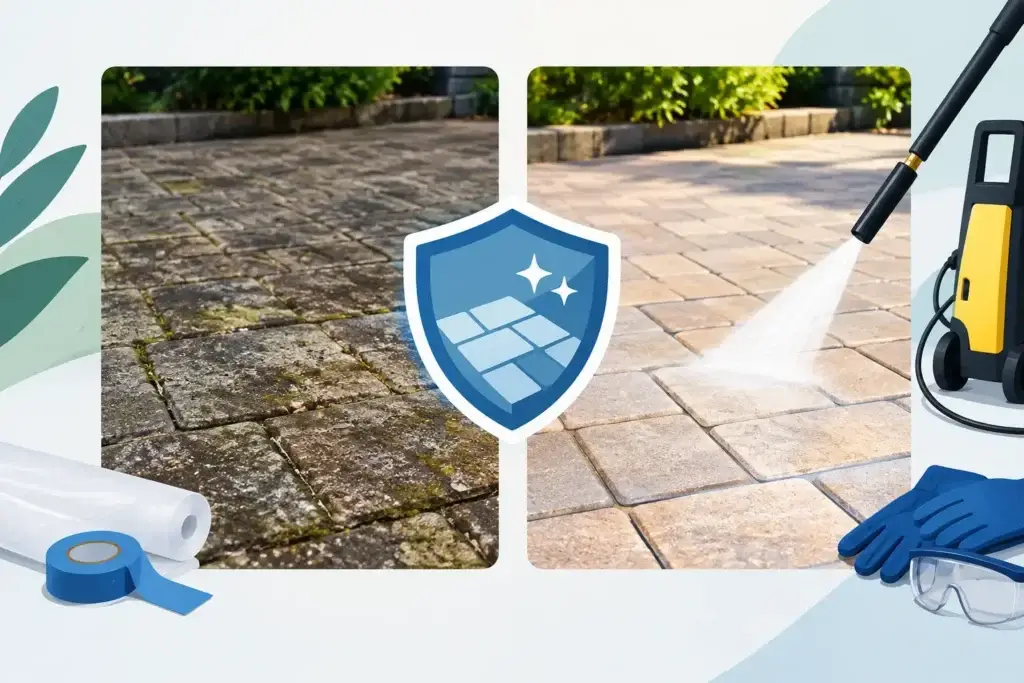
A paver patio or walkway can look dramatically better after a proper cleaning. It can also lose joint sand, develop streaks, or end up with loose edges if the work is too aggressive. To protect pavers during pressure washing, the goal is not simply to blast away dirt. It is to remove organic growth and surface buildup while preserving the pavers, the sand between them, and the base that keeps everything level.
For Connecticut property owners, that matters after a wet season. Shade, leaf debris, moss, algae, and winter grime can make patios, pool decks, walkways, and driveways look neglected and become slippery. The right cleaning method restores curb appeal without creating a more expensive paver repair project.
Why Pavers Need a Different Cleaning Approach
Concrete, brick, natural stone, and manufactured pavers are durable, but they are not one solid slab. Individual units sit over a prepared base and rely on joint sand to help lock the system together. High-pressure water aimed directly into those joints can wash sand out, weaken the interlock, and leave pavers more likely to shift over time.
The risk is greater around edges, corners, steps, drain areas, and older patios where sand has already deteriorated. Pavers with a rough or weathered surface can also show wand marks if the spray is held too close or moved unevenly. Softer natural stones, such as limestone or sandstone, need even more caution because excessive pressure can damage the surface itself.
This does not mean pressure washing is always the wrong choice. It means the equipment, cleaning solution, nozzle, technique, and follow-up work must match the material and its condition.
Inspect the Surface Before You Clean
Start with a close walk-through. Look for rocking or sunken pavers, broken edges, crumbling mortar, missing joint sand, cracks, lifted sections, and drainage problems. Pressure washing will not fix these conditions, and it may make them more obvious.
Pay attention to the type of staining as well. Green or black growth is usually algae, mildew, moss, or lichen. Rust, fertilizer stains, oil, tire marks, and efflorescence each require a different treatment. Using more pressure to solve a stain that needs the right cleaner is one of the most common ways pavers get damaged.
If the surface is unstable, has widespread missing sand, or contains delicate stone, it is best to address repairs first. A professional can also determine whether cleaning should be followed by re-sanding and sealing to restore the paver system properly.
Use Cleaning Solutions to Reduce Pressure
The safest way to remove organic growth is often to let an appropriate exterior cleaner do much of the work. A treatment designed for algae and mildew can break down the buildup so it rinses away with controlled water pressure instead of force.
Always use a cleaner appropriate for the specific paver material. Avoid harsh acidic products unless they are specifically intended for the surface and stain being treated. Acid can discolor some concrete pavers, damage certain natural stones, and affect nearby metal, plants, or finished surfaces.
Before applying any cleaner, wet nearby landscaping and protect sensitive plants. Keep products out of ponds, storm drains, and other areas where runoff can cause problems. Test a small, less visible area first, especially on colored pavers or stone. A clean surface is not worth faded color or a patchy finish.
Protect Pavers During Pressure Washing With Proper Technique
Pressure is only one part of the equation. Nozzle angle, distance, water flow, and the operator’s movement all affect the result. A professional-grade machine can clean efficiently, but in inexperienced hands it can remove sand and scar the paver surface quickly.
Begin with the lowest effective pressure and a wider fan-tip nozzle. Keep the spray moving in consistent, overlapping passes. Do not hold the wand in one place to chase a stubborn spot, and do not direct a concentrated stream straight down into the joints. Work at an angle that lifts debris away from the surface rather than excavating the sand between pavers.
A surface cleaner can provide a more even finish on large, durable concrete paver areas when used correctly. It reduces obvious wand lines and keeps the spray at a more controlled distance. However, it is not automatically suitable for every patio. Uneven, loose, antique, highly textured, or delicate pavers may require a gentler approach.
Extra care is needed along borders and retaining edges. These areas are more vulnerable because the pavers do not have the same support as those in the middle of the field. If you see sand washing out rapidly, stop and reassess the pressure, angle, and nozzle before continuing.
Do Not Ignore Joint Sand
Joint sand is not just cosmetic. It helps limit paver movement, supports the edges of each unit, and discourages weed growth when maintained properly. Some sand loss during cleaning can happen, particularly on older installations, but significant loss should be corrected after the pavers are fully clean and dry.
For standard joint sand, sweep dry sand into the joints until they are filled to the appropriate level. For many modern paver installations, polymeric sand may be the better choice because it helps resist washout and weed growth once activated correctly. The right product depends on joint width, paver type, drainage, and the manufacturer’s requirements.
Polymeric sand must be installed carefully. The pavers need to be dry, excess dust must be removed from the surface, and the sand must be watered according to product directions. Too much water, too little water, or residue left on the pavers can create problems. If you are unsure, professional re-sanding is a smart investment after a deep cleaning.
Let the Pavers Dry Before Sealing
Sealer can enrich color, reduce staining, and make future maintenance easier, but timing matters. Sealing a damp paver surface can trap moisture and contribute to haze, whitening, or an uneven appearance. The surface and joints need adequate drying time before any sealer is applied.
How long that takes depends on the weather, shade, humidity, paver material, and whether polymeric sand was installed. A sunny, breezy day may allow faster drying than a shaded yard after several rainy days. For that reason, there is no single safe timeline for every property.
Sealer also is not mandatory for every paver surface. Some homeowners prefer the natural, unsealed look and are willing to clean more often. Others want added stain resistance on a driveway, outdoor kitchen area, or high-traffic patio. The best option depends on how the space is used and the condition of the pavers.
Common Mistakes That Lead to Paver Damage
The biggest mistake is treating pavers like plain concrete. A narrow spray tip, maximum pressure, and a close wand distance may remove dirt quickly, but they can also strip sand, leave etched lines, and destabilize the surface.
Another issue is cleaning only the visible dirt while leaving the organic growth at the root. Algae and moss can return quickly if they are not properly treated. Overusing pressure becomes a cycle: the pavers are cleaned aggressively, sand is lost, and the surface needs more repair the next season.
Skipping the rinse and cleanup around the work area can also create trouble. Debris, soil, and cleaning residue should be managed rather than pushed into gardens, lawns, or drains. A careful exterior cleaning service protects the entire property, not just the square footage being washed.
When Professional Paver Cleaning Makes Sense
DIY cleaning can work for a small, stable paver area with light surface buildup and the right equipment. But a larger driveway, a heavily stained patio, extensive moss, loose pavers, or missing joint sand calls for more experience. The potential savings disappear fast if the result requires re-leveling or replacing pavers.
CT Softwash LLC uses professional cleaning methods built around surface protection, not brute force. For homeowners and property owners in southeastern Connecticut and nearby Rhode Island communities, that means a clear assessment, appropriate cleaning solutions, controlled washing, and straightforward advice on whether re-sanding or sealing is needed.
Your patio, walkway, or driveway should look clean without looking stripped down. When pavers are treated with the right balance of chemistry, water pressure, and aftercare, they stay safer underfoot, hold their color better, and continue adding value to the property for years to come.